Tuesday, September 1, 2026
Home Blog Page 21

Your post-lockdown social etiquette guide

0

Lockdown is lifting, temperatures are rising (somewhat), and there is an air of optimism that Britain just might beat this pandemic after all. Following months of working from home and staying away from friends, family and the outside world at large, we can finally take another step closer towards normality. But for many of us, our pandemic-stricken lives have become a sort of normal. Returning to society as we knew it before can seem daunting – even scary – and navigating our social lives again can be a balancing act. Our mental health has also taken a hit from the pandemic. Data from the Office for National Statistics suggests that twice as many adults in Britain had feelings of depression last autumn compared to before the crisis began, with women and younger adults more likely to feel depressed during the second virus peak earlier this year.

Data also suggests that people feel anxiety about lockdown lifting. According to recent research by Anxiety UK, 46 per cent of more than 900 respondents said they were concerned about pressure to socialise, while 30 per cent feel anxious about going to a busy shopping centre. So while it is exciting to be allowed to meet and hug family and friends again, visit the cinema or sit inside a restaurant, and potentially make plans to do things in the near future, a large number of people will feel the need to ease back into life as we knew it.

We spoke to experts about what you can do to cope with the anxiety around getting your social life back and how to make the most of our newfound freedoms. I want to do everything, but socialising now is so tiring. How do I avoid becoming fatigued? After England entered the second stage of lockdown easing – which saw pubs and restaurants reopen for outdoor service, and groups of six or two households were allowed to meet outdoors – many people spoke about how tiring it was to be socialising once again. With even more freedoms returning, we might feel the urge to “make up for lost time” and over-stretch ourselves. But Dr Natasha Bijlani, consultant psychiatrist at the Priory’s Roehampton Hospital, says rushing into socialising “could topple your equilibrium”.

“Try not to say yes to everything even if you’re feeling the need to do everything all at once,” she advised. “Start up your interactions again slowly by meeting one friend, then you can gradually start meeting other people – building up from there can help you avoid social fatigue. Jemma Meeson, systemic psychotherapist and founder of the Family Treatment Service, adds: “Wanting to go full tilt back into your previous life and ‘make up for lost time’ is understandable. In the excitement of this there may be a tendency to overdo it in all ways. “Seeing lots of people after limited contact, which has mostly been online, can be overwhelming.

“Pace yourself, manage your alcohol intake, get proper rest and sleep so that when you go out, you can be your best self and enjoy the times that you choose to socialise. This will help manage the exhaustion you may feel with the new changes that are happening all around us.” How do I overcome guilt about wanting to say no to plans? The pressure to socialise may be exacerbated by the fact it has been some time before any of us have been able to do so meaningfully. However, if you want to say no to making plans, it shouldn’t be a problem among good friends. “Be open with them about your feelings around coming out of lockdown,” said Ms Meeson. “If the plans don’t feel safe or feel too much at this stage – that’s ok – suggest alternatives.” This could include suggesting plans to meet up outdoors or in smaller groups. Dr Biljani adds that now may be a good time to do some “decluttering” of your social life and figuring out who your true friends are. “During lockdown, people have thought more about the quality of their friendships and now may be a good time to step away from people who are taking more from you than giving,” she says. “Because you haven’t seen the people who might be more likely to pressure you into socialising in a while, it might be a good time to disengage from them. Do some decluttering in your social circle and keep the friends you want around who will support you and be understanding about this strange and anxious time.” How do I deal with anxiety about being out and around lots of people again?

It may be startling to see large numbers of people mingling in the same area, even if they are social distancing or wearing masks. We have gotten used to being in mostly-empty spaces when we do venture out, so we feel anxious by the sight of lots of people in one place. “Remember we have all come through something extraordinary, it is not surprising or unusual to have these feelings of anxiety,” said Ms Meeson. “Take it gently, start with plans you feel are manageable and take it from there. As you become more confident and perhaps start to enjoy the wider world if you can, also notice how you are feeling and if it feels overwhelming, get help.”

Keeping up to date with government and medical guidance around Covid-19, and ensuring you’re following the rules can also help manage anxiety, says Dr Bijlani. “The virus has not yet been vanquished and so it is very normal that fears around contributing to the spread of Covid-19 are still there,” she says. “Keeping yourself updated and following the rules can help give you an extra layer of reassurance in knowing that you are keeping yourself and those you live with safe. Do what makes you comfortable, but if you feel yourself becoming very anxious, try and talk yourself through it, manage your breathing.

“Introspection is very important, so check in with yourself from time to time. Monitor your inner dialogue and if you find that you can’t manage or control your thoughts, do seek help and give yourself that little bit more care and attention.” How should I organise my social life as we come out of lockdown? While the thought of being able to crack open our planners and actually schedule dates, outings and events might be exciting, it can also feel quite overwhelming. Ms Meeson’s advice is to think carefully about who, or what, you have missed during lockdown, when trying to make plans and prioritising them from there. Both experts also recommend not ditching the good habits you may have accumulated during lockdown in favour of an overactive social life.

“Lots of people have found they have improved sleep habits, picked up exercising, cut down on drinking because they realised they don’t need it,” said Dr Bijlani. “Keep those good habits, and stick to a routine as much as you can because this will help reduce anxiety. “When it comes to making plans, don’t overcommit and don’t be afraid of being selective. At the end of the day, you have to do what’s right for you.

However, don’t be a shut-in if you do feel it is safe to go outside and interact with people again. Human beings are social creatures and social interaction has been proven to be good for brain health, as well as promoting a sense of belonging and security. “Socialising is an important part of the human connection,” says Dr Bijlani. “Don’t live in fear. It’s not healthy if people choose to isolate themselves. Seeing people in the flesh, talking and spending time with one another is really important.”

Source : Time & Independent

Influencing Personality Types

Every mother knows that when she looks at her child in the nursery for the very first time, something in his personality is already on display: whether he’s active or quiet, shy or introverted, extraverted or anxious, passive or aggressive. You can observe these characteristics right away. And, as you get to know your child better, you recognize that you can frame his environment to form his personality.

For example: you may have a shy child, and you recognize that right from the start by his reactions around strangers. Now, by creating social situations in which you build your child’s confidence around others, your shy child learns to trust you, his environment, and other people through monitored exposure. Will your child ever be a gregarious social butterfly? Probably not. But, can you help him become more socially confident? Yes.

Influencing your personality type

There’s a window in which you can influence a personality type. Extraverts, for example, put out less energy when they are with others, and therefore, are replenished by social discourse. An introvert, on the other hand, uses up a lot of energy to socially interact, and as a result, can find too much social exposure both draining and exhausting. In fact, neuroscience tells us that there is a biological origin to the five core personality types. Thus, there is no perfect personality type. And, there are no clear delineations of personality, but rather, many personality trees in our forest.

Because you are always evolving, and fluid in your emotions, you have the opportunity to deliberately and consciously develop or strengthen some traits that you like, and lower the decibels of those you don’t. By becoming aware of your own personality patterns, you can stop projecting out onto others your feelings unconsciously. This is how you gain control over your behavior, rather than being compelled by your complexes.

By catching a glimpse of the principles under your personality patterns, you can positively affect them in a way that works for you; this is how you can influence your personality type. So, although you cannot change the consolation of your complete personality, you can influence those parts of yourself — those multiple trees in your forest — to be more of what you want to be. This allows you to be comfortable in your own skin, and gives you the ability to choose the appropriate part of yourself in different social and emotional experiences. Thus, rather than being reactive, you can choose which traits to strengthen and which traits to use, which traits to enhance and which traits to reduce.

In the final analysis, your personality traits are inborn and yet, your environment can shape your personality traits, even if they go against type. So when picking a job, a career, or a mate, it is important to recognize who you are, the real you, so that you can discriminate between your wants and your needs, and strengthen and coalesce the dominant traits that work the best.

Royal Ascot opens. Summer is here.

0

The well-known event started on Tuesday 15th June, and attracted droves of celebrities, royalty as well as well-dressed men, women and children who are all wanting in on the fun and the opportunity to catch the eye of some the world’s most influential. A pillar of British sporting life, the Royal Ascot is as much about high fashion and celebrity culture as it is about high stakes on the tracks. The event first took place in 1839, and has run almost continually ever since – though it’s not the only significant racing occasion at the spectacular Ascot Racecourse. The event is the most valuable race meeting in Britain with a total prize fund of £6million.

While the Queen opted to watch the opening day from the comfort of her Castle, other Royals, Prince of Wales and the Duchess of Cornwall were there, alongside the Princess Royal, the Earl and Countess of Wessex and Zara and Mike Tindall. It is expected that there will be more royal appearances throughout the week. Other celebrities and famous people were also spotted in their best outfits. One that caught the eye is Charlotte Hawkins, GMB morning and Classic FM Sunday night’s presenter, in her white and yellow midi dress oozing style and elegance

As for betting enthusiasts, the favourites can change over time, with some horses performing well in races leading up to Royal Ascot coming to the fore, while others fall away. There might be issues with injuries or trainers that could also impact the horses that will be lining up at the starting line come race day. Some of this year’s favourites are : Stradivarius, Battaash, Palace Pier, Just Fine, Pied Piper, Campanelle and Spring is Sprung.

It was a scorching day at Ascot Racecourse attended by 12,000 people allowed as part of the Government’s pilot test event programme where everyone is tested before and after and no masks or distancing for spectators. The Champagne and Pimms flowed as racing got underway on the first day of the Royal meeting. King George VI is also a prestigious weekend meeting, second only to the Royal Meeting, and involves its own unique spectacle in the form of a royal procession to kick off the action on the tracks.

Whether you’re a seasoned better or once-a-year type spectator, the onset of summer and start of the horse racing season always brings with it a sense of excitement and carefree fun.

US Women’s Open’s final

0

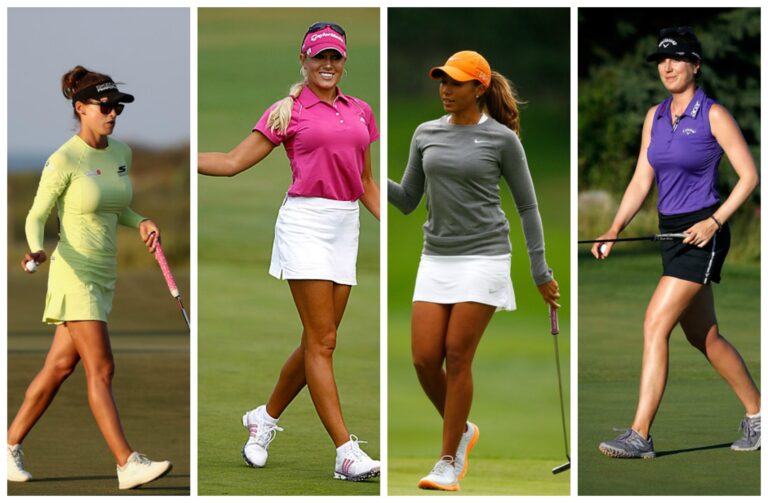
The United States Women’s Open is at its mid-point with the final 36 holes being contested this weekend at the Olympic Club’s Lake Course in San Francisco. A field of 156 of the top female professional and amateur golfers is vying for the most prestigious trophy in the history of women’s golf. This year’s event will mark the 12th time that a golf course of note has hosted both a men’s and a women’s National Open. This is the 76th edition of the oldest of the five majors that make up the LPGA Tour.

What was then called the “Ladies Open” was initially contested in 1946. It was organized by an entity called the Women’s PGA. The champion of that very first women’s golf major was future Hall of Famer Patty Berg. The Women’s PGA suffered from financial issues from the very beginning and went belly-up at the end of 1949.

In 1950 the Ladies Professional Golf Association was founded by 13 established women professionals of note and included Louise Suggs, the aforementioned Patty Berg who also served as the LPGA’s first president, Marlene Hagge, and the best known female golfer of the post-war era, Babe Zaharias. The brand new LPGA circuit continued with the playing of the Ladies Open. In 1953 the United States Golf Association agreed to become the full time host of the Open and the name of the tournament was changed to the United States Women’s Open. It followed the same criteria as the men’s U.S. Open with a certain amount of top golfers receiving exemptions into the tournament coupled with the remainder of the field advancing to the championship by means of regional qualifying tournaments.

For a period of time, the U.S. Women’s Open was played in minor markets at golf courses that weren’t necessarily among golf’s top courses. Some of those early Opens were contested at courses such as Starmount Country Club in Greensboro, Rolling Hills Country Club in Wichita, and the Dunes Golf and Beach Club in Myrtle Beach. On two occasions the Women’s Open was played at Winged Foot and Baltusrol although it was held at the “other” courses that make up those 36 hole complexes. In other words, it wasn’t held on the same courses that hosted the men’s version of the National Open. However, beginning in 1977 with the playing of the Women’s Open at Hazeltine, the ladies started playing their Open on courses that had also served as sites for the men. Over the course of the last 30 years or so, the women have been to

Colonial, Oakmont, Interlachen, Cherry Hills, Pinehurst, and most recently, the Champion Golf Club in Houston last December. In a similar vein, the 2023 version of the Women’s Open will be held at Pebble Beach Golf Links.

Scheduling this year’s U.S. Women’s Open at the storied Olympic Club is a real feather in the cap of the women’s game. First opened in 1924 and designed by the well known team of Willie Watson and Sam Whiting, the Olympic Club is situated alongside the southwest corner of San Francisco alongside the banks of Lake Merced. Its golfing neighbors include Harding Park, the site of last year’s PGA Championship, the highly regarded San Francisco Golf Club, and Lake Merced Country Club, the site of next week’s LPGA MEDIHEAL Championship.

Of course from the men’s perspective, the Olympic Club has been known for its heart-breaking moments for some of the game’s top performers. It all started at the 1955 Open when virtual unknown Jack Fleck defeated Ben Hogan in an 18 hole playoff. Arnold Palmer lost a big lead in the 1966 U.S. Open and faltered the following day to Billy Casper in a Monday 18 hole playoff. Scott Simpson eclipsed Tom Watson at the end in 1987 while the same happened to the ever popular Payne Stewart in 1998 at the hands of Lee Janzen. Webb Simpson won the U.S. Open title at Olympic in 2012 when Jim Furyk struggled down the stretch. The Olympic Club has also hosted a pair of U.S. Amateurs, the 1981 version won by Nathaniel Crosby, the son of longtime O Club member Bing Crosby, and the 2007 Amateur captured by Colt Knost.

There are multiple story lines at this year’s U.S. Women’s Open. San Francisco resident and former Stanford University student Michelle Wie West is making her golf comeback from wrist surgery in 2019. She is now married, has a young daughter, and the ever popular 2014 U.S. Open champ is hoping for a golfing comeback. So too is Inbee Park, winner of seven LPGA majors although her last one was at the 2015 Women’s British Open. A win by Inbee would be her third U.S. Open title. It’s hard to think about 24 year old Lydia Ko and comebacks, but she has been in a Jordan Spieth type slump over the past three years. She went winless on the LPGA Tour from May 2018 to this past April when she finally broke through and won her 16th circuit title. Ko has been on golf’s center stage since she won the Canadian Women’s Open in 2012 as a 15 year old amateur, and the game is in a much better place when the affable Lydia Ko is atop the LPGA leader boards.

There are two sets of sisters at the Olympic Club this year, and all four of them are capable of winning the U.S. Women’s Open. Nelly Korda and Jessica Korda won back to back LPGA tournaments earlier this year. Neither has a major title to her name, but both are among the favorites this week. So too are Ariya and Mariya Jutanugarn of Thailand. Ariya won the LPGA tourney in Thailand last month and a win at the Olympic Club would be her third grand slam title to go along with the 2016 British Open and the 2018 U.S. Open.

When all is said and done, it will take a control player who is an iron master to prevail this Sunday evening at the U.S. Women’s Open at the Olympic Club. The course will play to a par of 71 and can be stretched out to 6,457 yards. The Lake Course at the Olympic Club has a number of dogleg holes and most of them are built along the hilly slopes that run in that direction. A dogleg right hole drifts to the right meaning that a tee shot down the left side will end up in the middle of the fairway. Trying to cut the dogleg could be a bit precarious as the tee shot could instead bound further right into the wiry rough.

The 76th version of the United States Women’s Open is playing out this weekend at the Olympic Club’s Lake Course alongside San Francisco’s Lake Merced. It should be a great weekend of women’s grand slam golf. However, if the history of the O Club has anything to offer us, we might need to assume that the favorites will be upset by someone from the pack.

Source : Record-bee

All The Best Memorial Day Beauty Sales to Shop This Weekend

0

Stock up on products from brands like La Mer, MAC, Sand & Sky, and more — at discounts up to 70 percent off.
All The Best Memorial Day Beauty Sales to Shop This Weekend

Review: Signature Club A's Nature’s Color Lift Capsules

0

Review: Signature Club A’s Nature’s Color Lift Capsules
Beauty News
{$excerpt:n}
Capsules that claim to provide firmer, lifted skin
Review: Signature Club A’s Nature’s Color Lift Capsules

A history of piercing

0

A history of piercing
Beauty News
{$excerpt:n}
Face and body piercing have a longer history than you’d think!
A history of piercing

Stress – the mind-body connection

0

Stress – the mind-body connection
Beauty News
{$excerpt:n}
Ways to deal with the tension in your life
Stress – the mind-body connection