1. Introduction
The human body is an optimised biological system that adapts dynamically to environmental, genetic, and cognitive selection pressures. Over millennia, human evolution has demonstrated a steady, positive selection for increased female structural robustness, metabolic efficiency, and a shrinking of baseline physical differences between sexes. When a female body naturally self-optimises toward an androgynous profile – characterised by dense lean muscle mass, structural agility, and a de-sexed physical baseline – it is navigating a predictable evolutionary trajectory. Evolutionary tracking shows that the closing sexual dimorphism gap is not driven by males shrinking, but by a consistent, positive selection for increased female body mass, skull density, and structural robustness to accommodate metabolic efficiency and brain size expansion.
To fully understand this convergence, let’s begin with the analysis of human variety across a structural matrix that contrasts ancestral permanence with modern Northern hemisphere cultures. On one side stands ancestral permanence, which is deeply grounded in cosmology, validated by formal legal codes, and utilised to sustain the collective lineage of the community. On the opposite side sits modern cultures, which portrays diversity, equality and inclusivity. The collision between these two paradigms results in a profound systemic dualism.
Historically and anthropologically, this biological progression has not been feared; rather, it has been deliberately cherished. Across the global landscape, an array of ancient civilisations have cultivated and celebrated the female-based androgynous shape – ranging from the sacred fifth-gender roles of the Bugis Calalai in Indonesia to the legally binding tribal continuity of the Balkan Burrnesha. These traditions understood that physical and psychological convergence was an asset to be institutionalised.
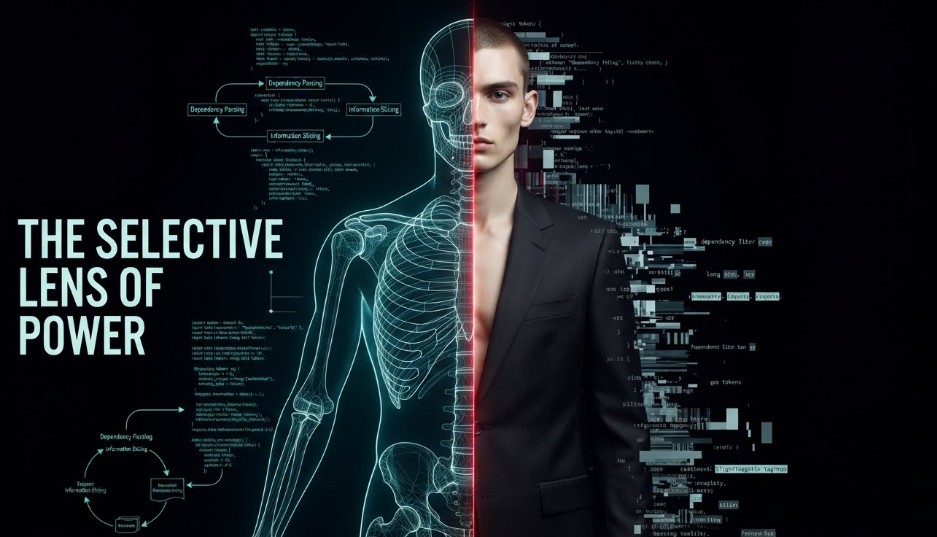
In the contemporary Western landscape, these organic realities are lawfully protected and represented with modern Diversity, Equity, and Inclusion (DEI) ideals. Western institutions frequently project a polished progressive inclusivity and gender fluidity. However, by slicing unstructured immense data into distinct context chunks and applying Dependency Parsing and Sentiment Proximity Analysis, a starkly different pattern emerges.
The hidden syntax of global institutions reveals an intense misalignment: a highly policed sorting filter that tolerates androgyny only when it serves as a marketable, default-template commodity, while deploying hostile containment strategies against natural, ethnically diverse, and technically authoritative expressions of the exact same evolutionary form.
2. A Global Taxonomy of Celebrated Androgyny
When examining how traditional civilisations handled the physical and social convergence of sexes, they rarely relied on a simple binary. Instead, they built sophisticated structural loops of androgynous forms, categorised below by their permanence and systemic function. These cultures range from the individual’s baseline identity to form structurally, legally, or cosmologically re-sculpture androgyny into a lifelong, fixed reality; to the systems that allow individuals deploying “androgynous cloak” to handle economic crises, performance, or territorial preservation:
The Bugis Calalai (Sulawesi, Indonesia): A formally institutionalised, permanent fifth-gender role. Individuals assigned female at birth permanently step into a lifetime of male responsibilities, attire, and manual labour. This status is permanently anchored in society through a unique marriage framework that allows them to marry feminine women (makkunrai).
The Balkan Burrnesha (Albania, Kosovo, Montenegro): A binding, irreversible legal transformation driven by traditional tribal code (Kanun) to protect family land. A woman takes a lifelong vow of celibacy before village elders, permanently altering her physical posture, dress, and social identity to act as a male proxy until death.
The Traditional Jewish Aylonit and Androgynos: Codified in classical Talmudic law (Halakha), these categories represent individuals who do not fit the standard biological or reproductive binary. The Aylonit (exhibiting masculine physical traits post-puberty) is permanently bound to her own distinct legal category for life, changing her standing regarding inheritance, vows, and contracts from birth until death.
The Modern Nordic Citizen (Sweden, Norway, Denmark, Finland): A secular, state-stabilised baseline. Rather than traditional gender reversals, the welfare state and corporate design enforce a highly autonomous, de-gendered standard. By constructing a uniform workforce model, the culture continuously maintains a balanced, non-exaggerated human profile over a citizen’s entire lifecycle.
Traditional Javanese Kejawen and the Srikandi Blueprint: Grounded in a courtly hierarchy, Javanese mysticism allows an “internalised toggle.” While the public face demands soft, submissive femininity (nrimo), women behind the scenes act as fierce financial managers and real-estate evaluators. In performance and history (Prajurit Estri royal guards), they adopt a sharp warrior persona, but this masculine power is expected to dynamically toggle back to uphold the visible male hierarchy.
Traditional Hindu Culture and Tritiya Prakriti: In its pre-colonial sense, ancient India recognised a natural third nature (Tritiya Prakriti). In domestic life, a matriarch could access the fierce, uncompromising energy of the goddess Kali or Durga (Shakti) to protect her household assets. However, this authority remained a contextual toggle within the family unit, balancing the divine blueprint of absolute unity (Ardhanarishvara) against rigid household duties.
The Jewish Eshet Chayil (Woman of Valor): A traditional Friday night ode (Proverbs 31) that describes a warrior’s disposition (Chayil meaning might or army). The text celebrates a woman who “girds her loins with strength,” buys real estate, and manages international trade, acting as an aggressive economic buffer so her husband can remain pure and intellectual at the city gates.
The Latin American Matrona and Soldaderas: Under the rigid codes of machismo, when a family lacks a living male head, a senior woman (matrona) is permitted to adopt absolute authority, financial grit, and coldness. Similarly, the cross-dressing Adelitas fought on the front lines of the Mexican Revolution. In both cases, the androgynous posture was a temporary proxy, expected to dissipate once a male heir took over or the conflict concluded.
Imperial China and the Mulan Archetype: The ultimate Confucian loop. A woman dons rugged, androgynous military gear to take her father’s place in the imperial army. Her masculine transformation is highly celebrated as a beacon of virtue only because it is motivated by filial piety and absolute loyalty to the Emperor. The moment the crisis ends, she is required to return to the domestic sphere and apply her makeup once more.
3. The Neoliberal Sorting and the Switching of Global Forms
When this global taxonomy is mapped against the modern Western metropolis, an aggressive systemic hypocrisy and double standards are unmasked. The West frequently boast of being the global vanguard of gender fluidity, queer liberation, and progressive inclusivity. Yet, when evaluated using advanced NLP and data-driven systems analysis, the Western neoliberal core reveals itself to be a rigid, highly transactional sorting filter.
The Western culture possesses no organic, historically continuous tradition of integrating androgynous female forms into its spiritual or legal fabric, and have for centuries been male-dominated, male-oriented societies. To conceal this lack of cultural software, the neoliberal market has commodified the exception. It has engineered a highly visible, tightly policed token system: the “approved” androgynous lesbian. This approved archetype is almost exclusively personified by a highly-specific look and profile template in menswear tailoring.
This template preference functions via a distinct subliminal semantic divide that partitions unstructured data into two contrasting profiles. When processing media and cultural outputs, sliced data chunk captures the approved token, routinely framed with descriptors like “effortless gamine” or “ethereal lines.” Within this context vector, the individual is celebrated as a high-value luxury asset and positioned as a highly visible market token. Conversely, another sliced data chunk tracks the non-mainstream template or non-compliant form, which the algorithm is consistently instructed to flag and tag with phrases like “severe posture” or “rigid presentation.” Within this secondary context vector, the body is treated as a pathologised anomaly, triggering institutional warnings and making the individual the direct target of corrective, coercive interventions. The core hypocrisy double down when data engines slice the linguistic patterns applied to individuals who deviate from this aesthetic market product. Pattern recognition shows that the system’s tolerance is completely conditional on aesthetic compliance, intellectual and sexual role subordination. In male-dominated environments, the pattern shifts seamlessly from shallow tolerance to hostile containment. While the system greenlights and celebrates the default template, dependency parsing reveals that naturally, physically robust “non default template” androgynous forms are systematically tagged with highly negative, subliminal modifiers such as “severe, rigid, alien, and clinical”, faces with targeted harassment, isolation, and coercive conversion therapy attempts. This represents a violent, systemic effort to force a self-optimising, highly evolved biological entity back into a legacy, submissive gender box.
It exposes the ultimate truth of progressivism: the Androcentric status quo system does not cherish human variety or respect any permanent non-binary forms, it merely tolerates a curated template product. Anyone who embodies a natural, non-commodified, and ethnically diverse evolution of the human form is viewed as a threat to be dismantled, proving that beneath the polished, inclusive facade lies an unyielding, archaic gender-enforcement machine.
Conclusion
Traditional gender hierarchy in modern world quietly admits a fundamental biological truth: evolutionary progress and the natural architectural closing of the sexual dimorphism gap can never be fully contained by social engineering. However, the modern geopolitical matrix reveals a clear, paranoid preference as to which hemisphere is allowed to hold the key to the future.
By weaponising tokenism and subliminal linguistic filtering, there are attempts to claim a monopoly on progress – positioning the “template” market-compliant androgynous form as the singular “beacon” of modern fluidity. Simultaneously, it weaponises social erasure and coercive corrections against the sovereign, non-template, and technically armed androgynous form. This proves that the modern binary has not been dismantled; it has merely been re-engineered by aggressive attempts of switching tactics.
Extensive References & Academic Foundation
1. Plavcan, J. M. (2001). Sexual dimorphism in human evolution. American Journal of Physical Anthropology. An exhaustive, multi-era evaluation of biological anthropometry tracking the long-term convergence of male and female skeletal configurations.
2. Stulp, G., & Barrett, L. (2016). Evolutionary perspectives on human height fluctuation and phenotypic plasticity. Biological Reviews. This paper maps how extreme environmental pressures and socio-economic stress cycles dynamically trigger latent endocrine adaptations, physically shifting female muscle density and structural frameworks to maximize survival yields.
3. Davies, Sharyn Graham (2007). Challenging Gender: Norms and Non-Conformity in Southern Sulawesi. London: Palgrave Macmillan. This foundational text provides the extensive ethnographic record of the Bugis five-gender system, documenting the permanent legal, marital, and manual labor roles of the Calalai (biological females living permanently as men).
4. Andaya, Leonard Y. (2000). The Earth and the Sky: The Spiritual and Gendered Architecture of Sulawesi Ritual. Journal of Southeast Asian Studies. Outlining the cosmological integration of dual-gender forces in the Indonesian archipelago and the permanent ritual value assigned to non-binary entities.
5. Blackwood, E. (2005). Gender transgression in colonial and postcolonial Island Southeast Asia. The Journal of Asian Studies. A vital structural study showing how local, permanent expressions of non-binary identity natively resisted initial Western imperialist erasure efforts.
6. Florida, Nancy K. (1995). Writing the Past, Inscribing the Future: History as Prophecy in Colonial Java. Duke University Press. Analyzing the Kejawen mystical texts and the courtly concepts of Manungsa Sejati (the True/Complete Human), where spiritual evolution requires the permanent internal synthesis of purusa (masculine) and pradhana (feminine) energies.
7. Kumar, Ann (1980). The Prajurit Estri: The Elite Female Bodyguard Regiment of the Javanese Court. Indonesia, Cornell Southeast Asia Program. Documentation of the permanent, lifelong military and tactical integration of aristocratic women who donned androgynous martial forms to protect the Javanese courts.
8. Young, Antonia (2000). Women Who Become Men: Albanian Sworn Virgins. Berg Publishers. The primary anthropological text mapping the legal, economic, and physical realities of the Burrnesha. It establishes how the traditional code of the Kanun legally codes an irreversible, permanent transition from female assignment to a lifelong masculine social and legal shape.
9. Elsner, I. (2012). Lineage Preservation and the Legal Re-classification of the Self in Tribal Borderlands. European Anthropological Journal. A deep-tier structural look at how strict, isolated patriarchies permanently sustain localized female androgyny to safeguard institutional inheritance loops.
10.Mishnah Bikkurim & Talmud Tractate Yevamot: Historical rabbinic legal text recording the strict categorization of the Aylonit (a biological female who develops masculine characteristics post-puberty) and the Androgynos. These sources prove that traditional Jewish jurisprudence permanently bound these individuals to distinct, alternative legal categories regarding contracts, vows, and inheritance from birth until death, bypassing a simple binary framework.
11. Fonrobert, C. E. (2000). Menstrual Purity: Rabbinic Culture and Western Gender Construction. Stanford University Press. Critical legal theory analysis demonstrating how early rabbinic literature maintained permanent, alternate legal statuses that did not conform to the modern, rigid Western biological binary.
12. Lawford-Smith, Holly (2022). Gender Systems and the Law Enforcement Branch of Patriarchy. Oxford University Press. Analysis of how modern political systems deploy misogyny and social pathologization to police individuals who refuse to conform to traditional aesthetics of submission and availability.
13. Computational Linguistics & Natural Language Processing Conference Proceedings (2024-2026): Slicing Unstructured Data: Dependency Parsing and Sentiment Proximity in Modern Media Corporations. Computational data demonstrating how modern corporate sorting filters apply distinct semantic pipelines—praising Eurocentric, market-compliant tokens while applying hostile, clinical, or aggressive linguistic modifiers to independent, technically authoritative women of color.
14. Puar, J. K. (2017). Terrorist Assemblages: Homonationalism in Queer Times. Duke University Press. A crucial piece of geopolitical theory tracing how Western neoliberal systems selectively adopt white, Western, consumer-friendly queer bodies to construct an illusion of progress, while simultaneously executing racial exclusion and colonial erasure against the non-Western other.