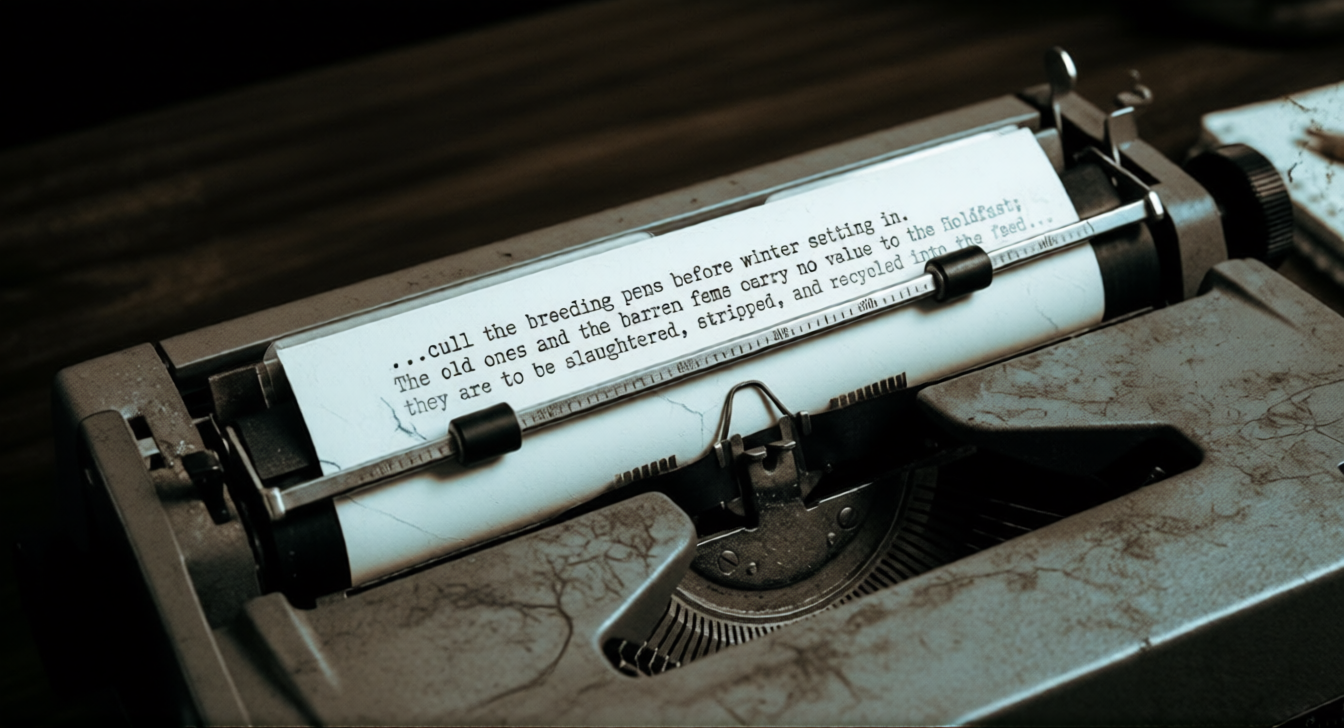
Look closely at the cultural landscape between 1974 and 1985, and a terrifying pattern emerges. Across vastly different geographies – from the editorial desks of New York and London to state-sanctioned publishing houses in Cairo, Lagos, and Jakarta – there was a sudden, synchronized flood of literature focused on the systematic degradation, body-slavery, and brutal “punishing” of women. This was not an accidental artistic trend. It was the narrative reflection of a global, highly organized political counter-revolution.
The late 1960s and early 1970s had delivered seismic, unprecedented wins for women. Second-Wave Feminism, decolonization movements, the advent of the birth control pill, legal abortion access (Roe v. Wade in 1973), and rapid entry into the corporate workplace signaled an unprecedented leap toward female autonomy. For a brief moment, the trajectory of modern history seemed to point toward liberation.
Then came the collision. By the late 1970s, a fierce institutional backlash erupted worldwide. The rise of Reaganomics and the Religious Right’s Moral Majority in North America, Thatcher’s economic austerity in the UK, the 1979 Islamic Revolution in Iran, Zia-ul-Haq’s regressive Hudood laws in Pakistan, and Indonesia’s military-enforced Panca Dharma Wanita all signaled the same reality: the state was reclaiming ownership over women’s bodies.
Yet, inside the publishing industry and media apparatuses, a bizarre paradox unfolded. While women in the real world fought to retain their newly minted rights, the themes being commissioned, greenlit, and heavily marketed were the exact opposite: stories of women stripped of their citizenship, reduced to biological livestock, sexually enslaved by militaries, or executed by the state. Why? Because the backlash economy realized that female suffering served a dual institutional purpose.
For critical women writers, documenting or allegorizing bodily torture was an urgent, panicking alarm bell – a warning that rights are not cumulative and can be revoked overnight. But for the those who funded and distributed them, these narratives functioned as a “Biological 1984.” They monetized societal bitterness against the feminist movement while sending a subtle, subconscious warning to female readers: Look at how easily you can be broken if you step outside traditional protection.
Before George Orwell’s surveillance apparatus could police the mind, these eight female authors – writing across five continents – warned that the ultimate frontier of totalitarian control would always be the uterus.
Below is the chronological sequence of how women writers recorded and predicted the global rollback of bodily autonomy between 1974 and 1985.
* The Most Brutal Speculative Violence: Walk to the End of the World (Suzy McKee Charnas, 1974)
Of the 8 novels, Charnas’s post-apocalyptic dystopia delivers the most extreme, unvarnished violence targeting women as a biological species.
The Biological Jab: Women (called “fems”) are not merely stripped of civil rights – they are stripped of their humanity entirely. Men blame women for the nuclear fallout that destroyed civilization. Consequently, fems are categorized as subhuman livestock.
The Violence: Fems are subjected to state-sanctioned gang rape, systemic starvation, forced hard labor, and casual public execution. Their biological capacity for childbearing is treated with disgust; pregnant women are penned up, used strictly for breeding, and discarded.
Why it’s the sharpest sci-fi jab: Unlike Gilead in The Handmaid’s Tale, where handmaids are given a toxic veneer of “sacred status,” Charnas strips away all religious sugarcoating. It presents male bitterness in its purest, most violently grotesque form: absolute misogynistic scapegoating reduced to institutional slaughter.
* The Most Relentless Realist Violence: Woman at Point Zero (Nawal El Saadawi, 1975)
If Charnas represents the ultimate speculative horror, El Saadawi delivers the most devastating jab because every single violence depicted actually happened in real life.
The Biological Jab: The novel tracks systemic violence inflicted on the female body from childhood to execution. It begins with child female genital mutilation (FGM) to curb desire, moves through forced marriage and domestic beating, and ends in sex trafficking where a woman’s body is treated as public economic property.
The Violence: Systematic physical mutilation, forced sexual availability, and state execution. When the protagonist Firdaus kills her abusive pimp in self-defense, the Egyptian judicial state sentences her to death – proving that a woman defending her own body is the ultimate political crime.
Why it’s the sharpest realist jab: Written by a medical doctor who was imprisoned by the Egyptian state for her work, El Saadawi proves that whether a woman is in her father’s home, her husband’s bed, a brothel, or a government cell, the institutional framework treats her body as property to be owned, mutilated, or executed.
* The Gilded Welfare Trap: Benefits (Zoe Fairbairns, 1979)
Fairbairns captures how state-level financial policy can be weaponized into a slow, polite, chemical prison for women.
The Biological Jab: Facing severe economic crisis, a near-future British government institutes a mandatory welfare allowance (“Benefits”) tied directly to reproductive compliance. Women’s bodies are subjected to state-mandated birth control chemicals inserted into the water supply, forced sterilization for the “unfit,” and compulsory domestic isolation.
The Violence: Economic coercion, state-sponsored chemical manipulation, forced sterilization, and societal displacement. Women who refuse to surrender their biological autonomy to state demographic planning are cast out into unserviced, violent urban ghettoes.
Why it’s the sharpest political jab: Written the exact year Margaret Thatcher took power, Fairbairns exposes the dark underbelly of state safety nets. It demonstrates how governments do not need military police to strip female rights – they can simply use financial dependency and economic blackmail to drive women back into traditional biological cages.
* The Compulsory Natalist Breakdown: The Joys of Motherhood (Buchi Emecheta, 1979)
Emecheta dismantles the romanticized myth of sacred motherhood, framing compulsory reproduction as a brutal, slow-motion consumption of the female body.
The Biological Jab: Set in mid-20th-century Nigeria under shifting British colonial and traditional Igbo frameworks, a woman’s body, self-worth, and legal existence are reduced entirely to her capacity to bear sons. Her physical form is treated as a vessel to be depleted for lineage and labor.
The Violence: Chronic physical exhaustion, severe malnutrition, psychological breakdown, and bodily neglect. The protagonist Nnu Ego endures endless cycles of pregnancy and poverty, only to be abandoned and discarded once her reproductive utility is exhausted.
Why it’s the sharpest cultural jab: It proves that patriarchy doesn’t always require a dramatic sci-fi police state to destroy and demean women. Cultural mandates and colonial economic shifts can achieve the exact same physical erasure by convincing women that their own bodily destruction is a moral duty.
* The Geopolitical Sexual Bargain: The Marriages Between Zones Three, Four, and Five (Doris Lessing, 1980)
Lessing uses high-concept speculative allegory to expose how statecraft and rulers use women’s bodies as transactional bargaining chips.
The Biological Jab: Cosmic rulers mandate a compulsory political and physical marriage between Al•Ith, the queen of a peaceful, egalitarian matriarchy (Zone Three), and Ben Ata, the ruler of a brutal, hyper-masculine military dictatorship (Zone Four) to fix regional demographic stagnation.
The Violence: Forced state-mandated coupling, psychological breaking, and the systematic erosion of female cultural sovereignty. Al•Ith’s body and mind are forcibly subjected to the crude, militarized demands of patriarchal rule to absorb its aggression.
Why it’s the sharpest allegorical jab: Lessing exposes how high-level statecraft routinely treats female autonomy, bodily integrity, and cultural spaces as disposable collateral to balance demographic deficits or pacify aggressive militaristic neighbors.
* The Military Sexual Slavery Archive: Fatima / Budak Nafsu (Titie Said, 1981)
Titie Said exposes the reality of wartime state-sanctioned sex slavery and the brutal hypocrisy of post-war moral judgment.
The Biological Jab: The female body is consumed as wartime military infrastructure. Fatima surrenders her body to Japanese imperial forces as a jugun ianfu (comfort woman) to save her family from execution, suffering severe reproductive damage, physical infection, and lifelong bodily trauma.
The Violence: Relentless gang rape, military sexual servitude, physical disease, and post-war societal discard. When the war ends, Fatima’s biological survival is met not with sanctuary, but with total social exile and moral condemnation by her own society.
Why it’s the sharpest post-colonial jab: It provides a devastating Non-Western historical anchor. Furthermore, its 1983 film adaptation under Suharto’s New Order state apparatus shows how producers co-opted female trauma into sensationalized screen violence to subtly warn women against stepping outside domestic state protection.
* The Legal & Linguistic Disenfranchisement: Native Tongue (Suzette Haden Elgin, 1984)
Elgin, a professional linguist, demonstrates how legal demotion and language suppression precede the total loss of physical autonomy.
The Biological Jab: Following the repeal of the 19th Amendment, women are legally demoted to the status of children or property. They are physically restricted to “Poorhouses” or domestic quarters, forbidden to work, vote, handle money, or make decisions regarding their own medical care without a male guardian’s signature.
The Violence: Total legal infantilization, spatial confinement, economic starvation, and the systematic suppression of female speech. Women are stripped of the legal right to defend their own physical bodies from domestic abuse or forced labor.
Why it’s the sharpest linguistic jab: Written in direct response to the defeat of the US Equal Rights Amendment (ERA), Elgin shows that long before physical chains are applied, the state uses legal definitions and language to erase women as adult human beings.
* The Totalitarian Breeding Dictatorship: The Handmaid’s Tale (Margaret Atwood, 1985)
Atwood synthesizes real-world historical atrocities into the definitive modern archetype of state-sanctioned reproductive fascism.
The Biological Jab: Women are strictly classified by their functioning ovaries. Fertile women (“Handmaids”) are stripped of their names, money, and rights, becoming state property subjected to monthly ritualized state rape (“The Ceremony”) to produce children for the ruling elite.
The Violence: Ritualized state rape, limb amputation, eye gouging, forced labor in toxic waste dumps (“The Colonies”), and public executions (“Particutions”). Non-compliant female bodies are physically broken or recycled as state waste.
Why it’s the sharpest dystopian jab: Atwood’s famous rule – that every single atrocity depicted was taken directly from real human history – makes it the ultimate warning of how rapidly modern constitutional democracies can invert into biological police states.
The Anatomy of the Commission
Looking at these eight texts together reveals that the publishing boom of 1974-1985 was not a simple, monolithic wave. It was an uneasy, highly lucrative collision between critical artists sound-testing the perimeter of human freedom and a commercial media apparatus eager to profit from the noise.
1. The Subversive Author vs. The Opportunistic Publisher
There is a profound gap between why a woman writes a warning and why an institution pays to print a million copies of it.
For writers like El Saadawi, Elgin, or Atwood, documenting the mechanics of bodily control was an act of radical documentation. They were compiling real-world policy – from Ceaușescu’s natalist decrees in Romania to local criminal codes – to create an intellectual alarm system. Most of the authors on this list explicitly utilized science fiction, speculative fiction, or dystopian premises to project the logical extremes of patriarchal control.
However, once these manuscripts entered the publishing pipeline and film production boards, the institutional objective shifted. Marketing departments and studio executives quickly realized that female imperilment sells with astonishing reliability.
In Western paperbacks, chilling political warnings were frequently wrapped in sensationalized, high-gloss covers depicting helpless women in torn garments. In Southeast Asia, Titie Said’s devastating historical account of wartime jugun ianfu was adapted by Indian-born Ram Soraya’s film studios into Budak Nafsu (1983) – a cinematic production that bypassed strict state censorship specifically because its explicit depictions of female suffering were disguised as “anti-colonial history.” The subversive warning was systematically re-packaged into digestible, profitable trauma-porn.
2. The Commercial Demand for Order and Containment
The cultural market does not exist in a vacuum; it reflects the anxieties of the boardrooms and institutions funding it. The rapid expansion of women’s civil, economic, and reproductive rights throughout the late 1960s and early 1970s fundamentally altered the structure of the labor force and the traditional family unit.
For commercial networks and state-adjacent publishers, this era of rapid flux created a massive market for narratives centered on re-establishing absolute order.
Stories depicting the systematic total containment of women served a calming, stabilizing function for traditional readers. They provided a fictional space where the chaotic, unpredictable progress of social liberation was abruptly halted, locked down, and brought back under institutional control. Whether framed as a dark cautionary tale or a gritty historical drama, the underlying structure of these stories offered investors a reliable formula: high narrative tension, guaranteed emotional shock, and the reassuring sight of an all-powerful system enforcing compliance.
3. The Biological 1984
When George Orwell wrote 1984, he posited that total control required a telescreen in every room to monitor speech, thought, and labor. The female writers of 1974-1985 recognized a far more efficient blueprint for authoritarian governance: you do not need a camera in every living room if you control the legal and physical status of the body.
Every state system, regardless of its underlying ideology, eventually realizes that reproductive demographic control is the ultimate baseline test of its authority. If a government can successfully mandate who gives birth, who receives medical care, who is legally considered an adult, and who owns a person’s physical labor, it no longer needs a complex surveillance apparatus to enforce obedience.
By greenlighting and expanding stories where the female body is treated as state-managed infrastructure, the publishing companies of the late 20th century unwittingly normalized the core premise of modern soft-authoritarianism: that bodily autonomy is not an absolute human right, but a temporary privilege granted – and easily revoked – by the state.
4. The False Promise: Dire Implications for Men (The Real Targets / Losers of Dystopia)
A critical element that commercial publishers – and reactionary readers – frequently misread in these texts is the realistic cost imposed on men. On the surface, authoritarian shifts promise men an expansion of rights: domain over the household, guaranteed marital or sexual access, legal supremacy, and a return to undisputed patriarchal authority. It is marketed as a net gain for male privilege.
However, a cold reading of these eight novels exposes the trap: the state never gives men ownership; it merely loans them supervisory duties inside a larger prison. And the fact that women – time and time again – are proven to be psychologically resilient and always bounce back exposes the ultimate vanity of the patriarchal project. While men settle for loaned authority, women quietly preserve their agency, adapt to the perimeter of the trap, and strategize for the inevitable collapse of the regime.
The Hierarchy of Disposable Males: In Charnas’s Walk to the End of the World and Atwood’s The Handmaid’s Tale, the vast majority of men are not elite rulers. They are low-ranking guards, cannon fodder, and disenfranchised laborers who are denied economic mobility, access to partners, and basic personal freedoms. A system that reduces women to biological livestock inevitably reduces low-status men to expendable machinery.
The Death of Personal Sovereignty: In Fairbairns’s Benefits and Elgin’s Native Tongue, men are forced to act as state-enforced wardens. Their own civil liberties, privacy, and economic choices are tightly regulated by the regime to maintain the illusion of domestic control.
Moral and Societal Ruin: In Titie Said’s Budak Nafsu and El Saadawi’s Woman at Point Zero, the men who participate in the systemic exploitation of women do not achieve security. Instead, they operate in a completely paranoid, morally degraded society where trust, family cohesion, and economic stability have collapsed.
Ultimately, these authors demonstrate that patriarchies do not liberate men; they conscript them. The state offers men a toxic bargain: accept total surveillance, military service, and political powerlessness, so long as you are allowed to rule over your own doorstep. The promise of expanded male ownership is merely the bribe used to secure male compliance in their own enslavement.
The Final Verdict: Blueprint or Prophecy?
The ultimate question hanging over this 1974-1985 literary wave is simple: Were these texts a prophetic alarm system, or were they an institutional blueprint? The answer is that they were an ongoing feedback loop between state power, commercial media, and artistic warning.
To call these eight books prophetic misinterprets how their authors worked. Margaret Atwood famously noted that she included no atrocity in The Handmaid’s Tale that had not already occurred in real history. Nawal El Saadawi did not “predict” the degradation in Woman at Point Zero; she documented it directly from Egyptian prison cells. Titie Said recorded the real-world historical trauma of wartime sex slavery in Indonesia. These women were not fortune-tellers – they were rigorous historians and political auditors drawing a line from historical laws to their conclusions.
Where the “prophecy” myth breaks down is at the institutional level. Writers drafted these stories as frantic cautionary warnings, but the publishing networks, film studios, and state media apparatuses that funded and mass-distributed them recognized a stress-test blueprint for soft authoritarianism. By funding, packaging, and monetizing stories of extreme female containment, it accomplished three things:
Pre-conditioned the Public: It normalized the idea that during economic, demographic, or geopolitical crises, stripping bodily autonomy is an inevitable baseline response.
Monetized Institutional Control: It proved that framing women’s suffering under the guise of “cautionary warning” or “historical drama” was one of the most reliable profit drivers commercially.
Defanged the Subversion: Over time, these stark political warnings were neutralized, transforming rigorous systemic critiques into safe, stylized aesthetic playgrounds.
A Global, Non-Centric Understanding of Bodily Control
Ultimately, by placing Western speculative classics alongside Egyptian prison accounts (El Saadawi) and Indonesian post-colonial history (Titie Said / Budak Nafsu), a broader truth becomes inescapable: state control over women’s bodies is a universal, synchronized mechanism of power – not a uniquely Islamist, Western, or purely sci-fi concept.
Whether executed through religious fundamentalism in North America, military state-building in Southeast Asia, medical prison systems in the Middle East, or economic austerity in Western Europe, the core objective remains identical. Whenever a political or economic system feels its authority slipping, it immediately moves to reclaim ownership over human biology.
These eight works were drafted as flaming red warning flags, but they were bought, packaged, and distributed by an opportunistic industry as a blueprint for containment. The message they uniformly convey is clear: rights can not be cumulative, nor they are to be permanently won. When power structures feel threatened, they don’t invent new machinery – they simply reach for the exact same blueprint these eight authors tried to warn about half a century ago.