Tuesday, September 1, 2026
Home Blog Page 12

The New Era of Digitalisation

0

One of the most promising and proven digital business models now is digital platforms and ecosystems. This is why it’s important to understand what digital ecosystems are and how individuals and organisations can play their roles and embrace as well as accelerate these ecosystems.

Digital ecosystems is an interconnected sets of offerings that fulfil consumer needs in one integrated experience that comprises businesses across different sectors to collectively offer a broad range of products and services. The characteristics of a digital ecosystem are: Customer-Centric, Data-driven, Automated, Global, and Dynamic. The level of how organisations navigate digital ecosystems can be based on their maturity level, be it scaling the transformation to a company and industry level or driving large-scale transformation across multiple industries through cross-sector collaborations and leverage technology across different parts of the value chain. Then they can define their roles as System Orchestrator, Modular Producer, or Customer. The business model as a participant in the digital ecosystem, will be based on parameters such as the nature of the ecosystem, the scale of industry partnerships, and the revenue model.

While it’s quite easy to explain why digital ecosystems can perform so well, it is also worth-reminding how difficult it is to set up such successful robust ecosystems. Loyal customer base, consistent value creation, clear alignment of a diverse range of partners, customers, and technologies as well as a very agile mindset are required. Understanding the power and implications of the rising digital ecosystems around the globe and also find ways to contribute, participate, and interact with the actors in the ecosystem to harness the power, we will all have the potential to create a new era of sustainable modernised platform.


What’s on at the BFI in 2025

0

The BFI is proud to unveil highlights from its 2025 cultural programme. Audiences can look forward to an inspiring range of curated film seasons, premieres, festivals, re-releases, and exclusive home entertainment content—available at BFI Southbank, BFI IMAX, and venues across the UK via BFI Distribution, as well as on BFI Player, UHD, Blu-ray, and DVD.

Spanning cinema classics, newly restored works, emerging talent, and landmark retrospectives, the programme offers powerful and diverse screen stories from the UK and around the world.

January to April 2025

Luchino Visconti – Retrospective including a BFI re-release of Rocco and His Brothers (3 Jan), presented in partnership with Cinecittà.

Sidney Poitier season (Jan)

UK-wide release of Victor Kossakovsky’s Architecton (10 Jan)

New BFI Blu-ray releases: Kurosawa’s High and Low and Stray Dog (20 Jan); Yojimbo and Sanjuro in new 4K UHD and Blu-ray sets (17 Mar)

London Short Film Festival (Jan)

Woman with a Movie Camera Summit (18 Jan) and curated BFI Player collection

Chantal Akerman – Major retrospective including a re-release of Jeanne Dielman… (7 Feb), UK-wide touring package, BFI Player collection, and two Blu-ray editions (Feb/March)

Picnic at Hanging Rock – Valentine’s previews and 4K Director’s Cut re-release (21 Feb)

All We Imagine as Light by Payal Kapadia – Exclusive BFI Player release (17 Feb); Blu-ray/DVD edition (3 Mar)

Cronos – 4K restoration released on BFI Blu-ray and UHD (24 Feb)

Edward Yang retrospective (Feb/March)

Black Rodeo screenings (Feb/March)

BFI Future Film Festival (20 Feb – 6 Mar) – UK’s largest festival for young filmmakers; full programme to be announced

BFI Flare: London LGBTQIA+ Film Festival (19–30 Mar)

London Soundtrack Festival – Inaugural edition in partnership with BFI, including events at BFI IMAX (19–26 Mar)

UK-wide release of Four Mothers by Darren Thornton (4 Apr)

New Taiwanese Cinema season (Apr)

Queer East Festival (Apr)

Curated film season by Karina Longworth to accompany her new podcast series You Must Remember This, focusing on the late works of iconic Hollywood directors (Apr)

Wojciech Has retrospective in partnership with Kinoteka Polish Film Festival (Apr)

May to August 2025

Mai Zetterling centenary season in collaboration with the Swedish Film Institute (May)

Black Debutante – First and second features by Black filmmakers (May)

UK Asian Film Festival (May)

Michael Haneke retrospective in partnership with Curzon (June)

Barbara Loden, Visionary – Season dedicated to Wanda and its legacy, curated by Elena Gorfinkel (June)

BFI Film on Film Festival (12–15 June)

Dorothy Dandridge season (July)

Moviedrome – Celebrating the cult BBC series that introduced many to art house cinema (July)

London Indian Film Festival (July)

Sophia Loren season in partnership with Cinecittà (Aug)

John Akomfrah retrospective (Aug)

S.O.U.L. Fest (Aug)

September to December 2025

Ridley Scott retrospective (Sept/Oct)

Anna May Wong season (Sept/Oct)

Associated Rediffusion – Celebrating works from the UK’s first ITV franchise (Sept/Oct)

The 69th BFI London Film Festival – taking place across the UK and online (October)

Melodrama – Season running through Oct–Dec, UK-wide

Terence Davies retrospective in partnership with Edge Hill University (Oct/Nov)

Screen Two – Celebrating the BBC series that succeeded Play for Today, filmed entirely on celluloid (Oct/Nov)

The BFI’s 2025 cultural line-up offers a compelling mix of screen storytelling, restoration, and innovation, deepening connections with cinema’s past, present, and future. Full details and updates available via BFI Southbank, BFI Player, and partner venues.

BFI.org.uk

US Open 2025 Day 3 Recap

0

The final group of first-round matches completed the opening phase of the 2025 US Open.

Alexander Zverev and Jannik Sinner both advanced with strong performances, while Iga Swiatek progressed smoothly in the women’s draw. Coco Gauff also moved through, though she was forced to work hard against Ajla Tomljanovic before sealing the win.

The opening round confirmed the strength of the seeded group while also showing the competitive depth of the field in New York.

Yamashita Becomes Third Japanese Champion at AIG Women’s Open

Miyu Yamashita claimed victory at the 2025 AIG Women’s Open at Royal Porthcawl, closing with a final-round 70 to finish at 277, eleven under par, and secure a two-shot win over England’s Charley Hull and fellow Japanese player Minami Katsu. Yamashita becomes the third player from Japan to win this championship, following in the footsteps of Ayako Okamoto in 1984 and Hinako Shibuno in 2019. She is also the first player since In-Kyung Kim in 2017 to win the AIG Women’s Open having held or shared the lead after both the second and third rounds. Her path to victory began with a 68 on Thursday, followed by a tournament-low 65 on Friday. Although she faltered slightly with a 74 in round three, she maintained her composure on Sunday with a two-under-par finish to seal her maiden major title. Yamashita led by three strokes after the second round and by one heading into the final day.

This win is her first outside the LPGA of Japan, where she has claimed thirteen titles since 2021. In that same period, she has recorded 44 top-three finishes – 41 on the JLPGA and three on the main LPGA circuit. Her previous best finish at the AIG Women’s Open was tied-thirteenth on debut in 2022. She followed that with a T21 finish in 2023 before missing the cut in 2024. Currently ranked fifteenth in the Rolex Women’s World Golf Rankings, Yamashita now adds a major championship to her expanding résumé.

Charley Hull recorded her second runner-up finish at the AIG Women’s Open, matching her 2023 performance at Walton Heath. It marks her fourth second-place result in a major and her tenth top-ten overall in such events. Playing in front of a home crowd, Hull closed with a 69 to reach nine under par, a score matched by Minami Katsu, who also shot 69 to share second place. Katsu’s performance was highlighted by a 65 in the third round, the lowest score of Saturday’s play. Just behind them, Rio Takeda and A Lim Kim shared fourth place at seven under par. Takeda opened with a 67 and remained in contention throughout, while Kim’s week included a third-round 67 before a closing 73.

Among the amateurs, Spain’s Paula Martin Sampedro stood out with a tied-eighth finish. This marks the lowest finish by an amateur in the AIG Women’s Open since 2005, when Michelle Wie placed third and Louise Stahle also finished T8. Martin Sampedro also delivered the lowest score of Sunday’s final round. Yamashita’s win extends the current run of first-time major champions at the AIG Women’s Open to thirteen, a streak that began with Stacy Lewis in 2013. It is now the second-longest such sequence in tournament history, trailing only the fourteen straight first-time winners recorded between 1982 and 1996. In total, there have now been 42 different champions of the AIG Women’s Open since the tournament began in 1976.

Royal Porthcawl played significantly tougher on Sunday, with a final-round stroke average of 74.93. The tournament average over four days stood at 73.64. The 1st and 3rd holes tied as the most difficult in round four, each playing to a 4.66 average. Notably, Shannon Tan, playing in the second group of the day, was the only player to birdie either of those two holes in the final round. The 16th emerged as the hardest hole overall across the week, with a cumulative stroke average of 4.51. By contrast, the 18th was the easiest in the final round, averaging 4.52 strokes, while the 9th was the easiest across the championship with a cumulative average of 4.60. Over the course of the week, seven holes played to an average under par, and no player recorded a double bogey or worse on the 7th, 8th or 18th holes in any round.

AIG Day 3 Recap

Kim A Lim delivered a bogey-free 67 on Saturday to surge into contention at the AIG Women’s Open, cutting an eight-shot deficit down to one with a single round remaining. Her move from tied-seventh to solo second was the most significant climb among the leading groups on a day where scoring conditions eased and players capitalised. Kim’s round stood out not just for its efficiency – five birdies, no mistakes – but for its rarity. She was the only player among the final six groups to shoot under par. The 2020 U.S. Women’s Open champion now finds herself at 208 (-8), just behind Japan’s Miyu Yamashita, who holds on to a narrow lead at nine under. Yamashita, who led by as many as five overnight, saw her advantage shrink after a third-round 74 – her highest score of the week. Still, she enters Sunday as the front-runner, but the margin is thin, and the challengers are now crowding.

Andrea Lee matched Kim’s 67, firing seven birdies to pull within two shots of the lead at 209 (-7). Lee began the day nine shots back, but the UCLA alumna now has a real shot at her first major title if she can replicate Saturday’s momentum. inami Katsu posted the best round of the tournament so far: a 65 that tied the week’s low mark. She climbed from tied-35th to tied-fourth at 210 (-6), slicing a twelve-shot gap to just three. Katsu, teeing off at 11:35 -three hours before the leaders – set the pace early and held the clubhouse lead for much of the afternoon. Her six-under was built on control and steady birdie conversions, marking her best position ever in this championship. Her previous high finish was T21 in 2023. Charley Hull, playing in her 14th AIG Women’s Open, matched her personal best round in this event with a 66 – tying the 66 she shot in 2014 at Royal Birkdale. Starting the day eleven shots off the pace, she now sits tied-fourth at 210, three behind. Her surge included seven birdies in a twelve-hole stretch from the 2nd to the 13th. Megan Khang quietly kept herself in contention with a 68, also reaching 210. It’s her best round at this event since Muirfield in 2022. Khang, now in her tenth appearance, is chasing a first major and looking to better her best finish of T11, recorded on debut in 2016. Rio Takeda, who began the day in solo second, faltered with a 74 and dropped into the logjam at 210. While disappointing, she remains just three back, keeping Japan’s hopes alive alongside Yamashita. The third round average of 72.19 was more than two strokes lower than Friday’s 74.425, reflecting improved conditions and strategic adjustments. The cumulative tournament average now sits at 73.39. The par-5 9th remained the easiest hole for a third consecutive day, yielding 1 eagle, 32 birdies, and a stroke average of 4.58. Nine holes in total played under par. The 14th proved the hardest, averaging 4.61. It yielded only two birdies, with 33 bogeys and six double bogeys. Rounding out the toughest holes were the 16th, 17th, 1st, 15th, and 3rd – an indication of how the back nine, particularly in windy conditions, continues to test players’ patience and control. There were four bogey-free rounds: A Lim Kim (67), Jenny Shin (68), Mao Saigo (68), and Hyo Joo Kim (68). Kim’s round, however, stood tallest for its pressure-context and leaderboard implications.

Minami Katsu’s 65 tied the tournament’s best score and was unmatched on the day. Of the past 48 AIG Women’s Open champions, 39 were leading or within two shots of the lead going into the final round. Only two of the last nine winners came from outside that zone – Georgia Hall in 2018 (one back), and Lydia Ko in 2024 (three back). This stat tilts the odds toward Yamashita, Kim, and Lee – but with five players at 210 (-6), the margin for error has evaporated. The final round promises a crowded chase. The leaderboard’s top six are separated by just three shots, and Day 3 proved the course can yield both birdie runs and double-bogeys in quick succession. Kim, Lee, and Hull carry momentum. Yamashita retains the lead but faces pressure from all angles. The champion will likely be the one who holds nerve on the 14th – and takes advantage of the 9th.

As It Happens: Brighton Pride

Pride Street Party – Marine Parade

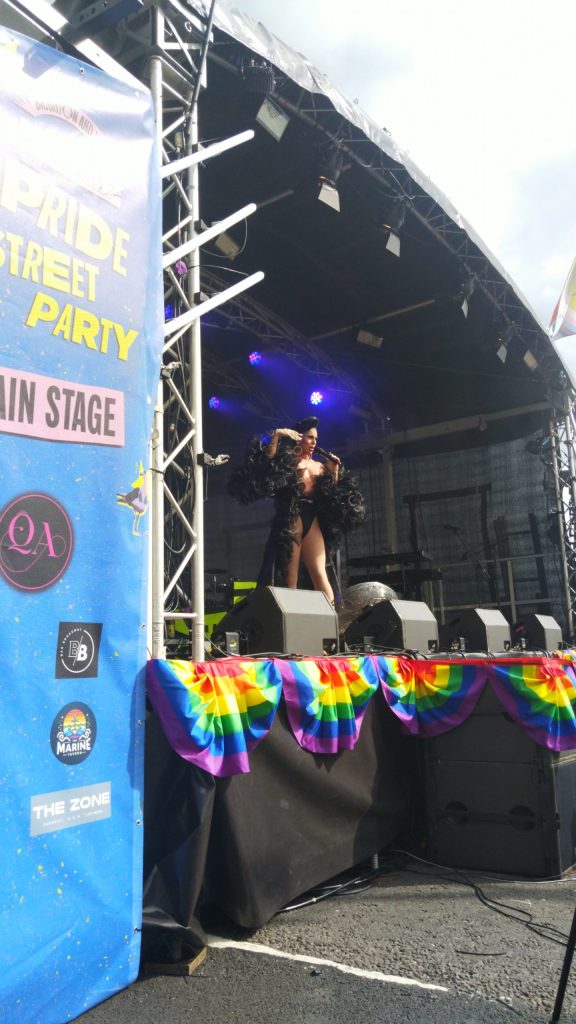
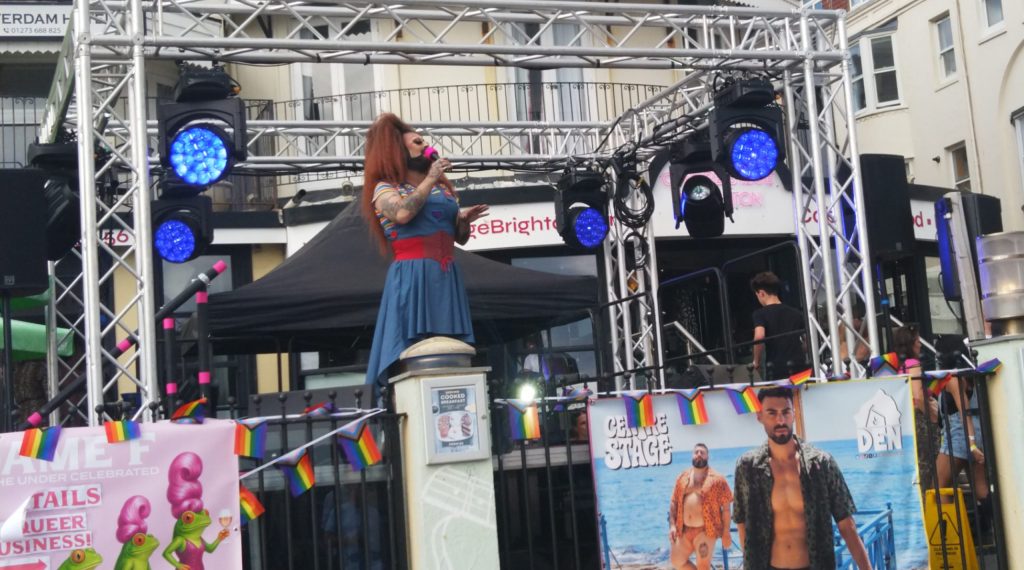
As Preston Park draws national attention with headline acts, Brighton’s Street Party adds its own character to the Pride weekend. Centred around the Kemptown area, particularly along Marine Parade, this part of the celebration brings local energy, club culture, and strong community presence. The Street Party is a ticketed event, with both day and weekend passes required for entry into the fenced-off zones along Marine Parade and adjoining streets. These tickets help support the Pride community fund and maintain safety across the site.

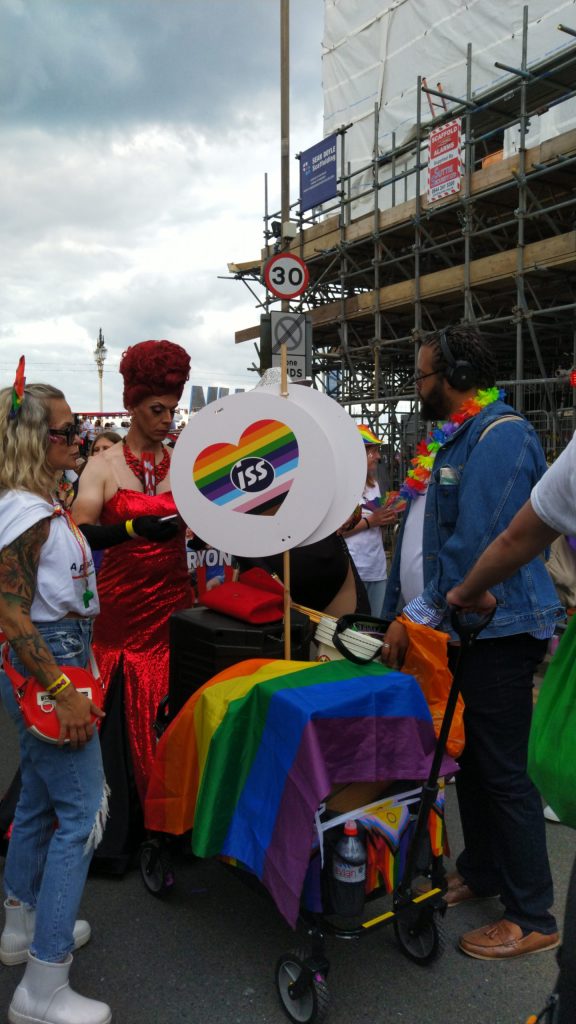
The Drag Stage is a central feature, curated by a lineup of Brighton’s key LGBTQ+ venues: Queens Arms, Legends, Bar Broadway, Marine Tavern, Bulldog, Affinity Bar and The Zone. Programming includes a mix of live singing, lip-syncs, DJ-led acts, and crowd-favourite performers such as Drag Race UK alumni Tayce and Danny Beard, along with Sonia, Freemasons, Jaguar, Chico, and more. Music zones hosted by Revenge and Charles Street Tap stretch the soundscape from house and disco to throwback pop, while Patterns offers a laid-back, Ibiza-style outdoor terrace setup overlooking the sea. These clubs, already mainstays of Brighton nightlife, take on a larger presence during Pride with extended outdoor spaces and curated lineups. For those wanting a break from the music, New Steine Gardens offers a quieter retreat, with community stalls, shaded seating and chill-out spaces. While not as globally publicised as Preston Park’s headline acts, the Street Party carries a strong sense of Brighton’s LGBTQ+ identity: rooted in venue culture, built around resident performers, and shaped by the city’s long-standing pride traditions. Scroll down for our on-the-ground image gallery and observations from this year’s Street Party and Pride Parade.

Photos: HersToday/Brighton Pride 2025

Pride Parade

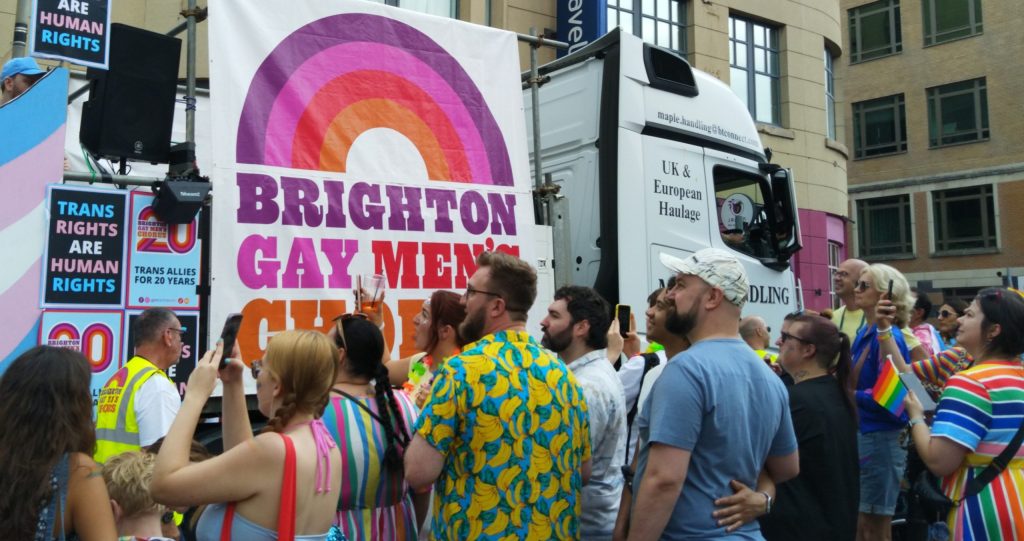
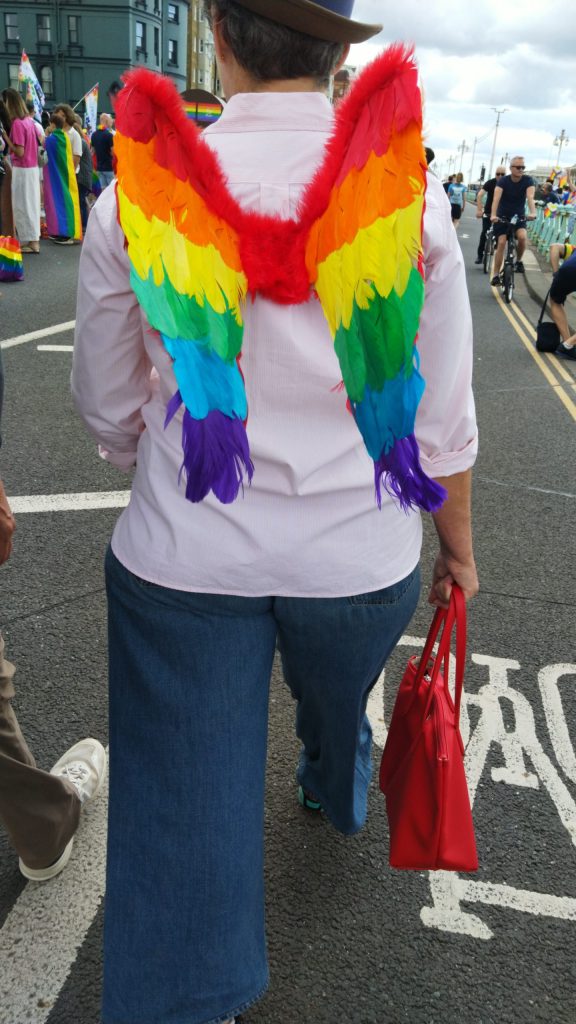
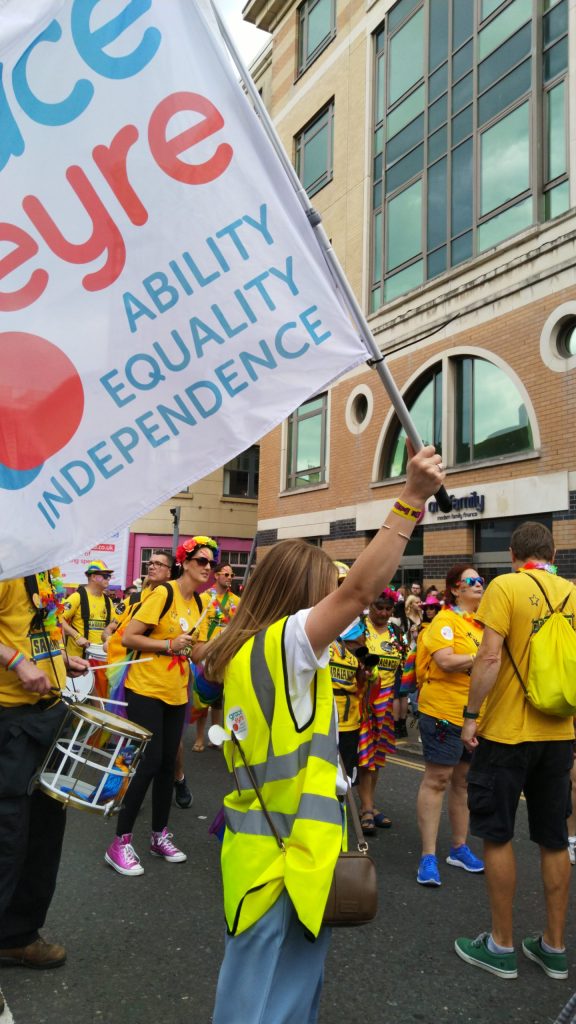
Brighton& Hove Pride 2025 kicked off its annual parade on Saturday, August 2, starting from Hove Lawns and moving east along the seafront before turning up into the city via Gloucester Place, London Road, and Preston Road. The route ended at the southern entrance of Preston Park, where Pride in the Park continues the weekend celebration. We joined the crowd on the ground as the parade set off, with good energy from both participants and spectators. Crowds were already packing key points along the route early, especially around London Road and the starting stretch. Here’s a visual snapshot of the day.

HersToday is proudly supporting The UK Pride Networks

Empowering Change: Resilience, Energy, and Sustainability

0

The King’s recent speech outlined a comprehensive legislative program focused on security, fairness, and opportunity for all. The newly formed government under Prime Minister Keir Starmer has outlined an ambitious legislative agenda, signalling its immediate priorities through a comprehensive list of bills. These plans reflect many of the policy commitments made in the party’s election manifesto and cover a broad spectrum of areas, including economic stability, energy, security, health, and equality.

Key Areas and List of Proposed Bills:

Economic Stability and Growth
Budget Responsibility Bill: Ensures fiscal responsibility and transparency.
National Wealth Fund Bill: Establishes a national wealth fund for long-term financial stability.
Pension Schemes Bill: Strengthens pension schemes for retirees.
Planning and Infrastructure Bill: Accelerates infrastructure and housing development.
Employment Rights Bill: Enhances employment rights and bans exploitative practices.
English Devolution Bill: Grants greater decision-making powers to local communities.
Passenger Railway Services (Public Ownership) Bill: Reforms the railway system.
Better Buses Bill: Improves public transport options.
Bank Resolution (Recapitalisation) Bill: Strengthens financial system resilience.
Arbitration Bill: Enhances dispute resolution processes.
Product Safety and Metrology Bill: Ensures product safety standards.
Digital Information and Smart Data Bill: Drives innovation using digital information.
High Speed Rail (Crewe to Manchester) Bill: Expands high-speed rail connectivity.
Draft Audit Reform and Corporate Governance Bill: Enhances corporate governance.

Great British Energy and Clean Energy Superpower
Great British Energy Bill: Establishes a publicly owned clean power company.
The Crown Estate Bill: Efficiently manages public assets.
Sustainable Aviation Fuel (Revenue Support Mechanism) Bill: Promotes sustainable aviation fuel.
Water (Special Measures) Bill: Improves water quality and management.

Secure Borders and Public Safety
Border Security, Asylum and Immigration Bill: Modernises the immigration system.
Crime and Policing Bill: Strengthens community policing.
Terrorism (Protection of Premises) Bill: Protects public venues from terrorism.
Victims, Courts and Public Protection Bill: Enhances support for victims and reforms the justice system.

Breaking Down Barriers to Opportunity
Children’s Wellbeing Bill: Raises educational standards and promotes children’s wellbeing.
Skills England Bill: Enhances skills development and employment prospects.
Renters’ Rights Bill: Grants greater rights and protections to renters.
Football Governance Bill: Establishes an independent football regulator.
Draft Leasehold and Commonhold Reform Bill: Reforms housing market practices.
Draft Equality (Race and Disability) Bill: Promotes equality and anti-discrimination measures.
Draft Conversion Practices Bill: Bans harmful conversion practices.

Health
Tobacco and Vapes Bill: Restricts advertising and sales of cigarettes and junk food.
Mental Health Bill: Modernises mental health care.

National Security and Serving the Country
Hillsborough Law: Promotes transparency and accountability for public servants.
Armed Forces Commissioner Bill: Establishes an independent Armed Forces Commissioner.
Northern Ireland Legacy Legislation: Supports peace and reconciliation in Northern Ireland.
House of Lords (Hereditary Peers) Bill: Removes hereditary peers from the House of Lords.
Cyber Security and Resilience Bill: Enhances cyber security measures.
Commonwealth Parliamentary Association and International Committee of the Red Cross (Status) Bill: Strengthens international partnerships.
Lords Spiritual (Women) Act 2015 (Extension) Bill: Promotes gender equality in the House of Lords.
Holocaust Memorial Bill: Establishes a Holocaust Memorial.

Key Strengths:
Emphasis on economic and fiscal responsibility.
Commitment to equality and social justice.
Strong measures for public safety and environmental sustainability.

Potential Challenges:
Implementation complexity due to the breadth of the agenda.
Possible political resistance to significant reforms.

Key Areas and Their Relevance for Women
While the agenda covers a broad spectrum of issues, several key areas are particularly relevant to women in general. This article will highlight these areas, emphasising their significance and potential impact.

Economic stability can lead to more job opportunities and better financial security for women who often face economic disparities. Transparent corporate governance and stronger pension schemes can provide long-term financial stability, benefiting women, who are more likely to be dependent on pensions due to longer life expectancy. Introducing a new deal for working people, banning exploitative practices, and enhancing employment rights. Women are frequently encounter workplace discrimination and exploitative practices. Strengthening employment rights can help combat these issues, ensuring fair treatment and equal opportunities. Modernising the Mental Health Act to ensure mental health is given the same priority as physical health. Mental health issues disproportionately affecting due to discrimination and stigma. Improved mental health services can provide much-needed support. Women, who often juggle multiple roles, can benefit from enhanced mental health provisions, helping them manage stress and mental health issues. Raising educational standards, promoting children’s wellbeing, and establishing Skills England to foster employer partnerships. Access to quality education and skill development is vital for empowerment. These measures can help bridge the educational gap and promote equal opportunities. Granting greater rights and protections to renters, including ending no-fault evictions and reforming grounds for possession. Housing security is a critical issue, especially for those who may face discrimination in housing. Strengthened renters’ rights can ensure safer and more secure living conditions. Increasing the age for purchasing cigarettes, restricting advertising of junk food to children, and limiting the sale of high-caffeine energy drinks. These measures promote healthier lifestyles, which are crucial for women, who often bear the brunt of family health management, who might face health disparities. Draft Conversion Practices Bill and Draft Equality (Race and Disability) Bill. Banning conversion practices and enshrining the full right to equal pay in law. Banning conversion practices is a significant step towards protecting individuals from harmful and discriminatory practices. Ensuring equal pay is essential for addressing the gender pay gap and providing economic fairness for women. Violence Against Women and Girls. Crime and Policing Bill, Victims, Courts and Public Protection Bill Measures to halve violence against women and girls, and strengthen support for victims. Addressing violence against women and girls is a crucial issue. Strengthening support systems and legislative measures can provide better protection and justice for victims.

The King’s speech presented a wide-ranging legislative agenda with several key areas that hold significant importance for women. By focusing on economic stability, employment rights, mental health, education, housing, health, equality, and anti-violence measures, the proposed legislation aims to create a more inclusive and fair society. These initiatives, if effectively implemented, could lead to substantial improvements in the lives of women, fostering a more equitable and just environment for all.

Digital Divide: Whose Side Are You On?

0

The pandemic escalated many issues, but as the world becoming dependent on digital, it becomes clearer that there is a great digital divide. This can be generational gaps, size and nature of businesses, geographic regions, or which future tech to pursue.

Two factors that companies usually focus on when addressing the above issues either for their Client, the market, or for their own organisation-sake, are Smart Predictive functionalities and Talent quality. There are more and more who now beginning to ask as to why they seem to have been made deliberately short-sighted and not achieving their program goals when they’ve joined the flow and invested so much into digital transformational initiatives. That is the exact point that you need to thoroughly review the purpose and mission of your organisation perhaps as far as from when it was first created. Get impartial and objective views, ensuring it stays relevant with the now and the future, to gain long-term upper-hand and advantages. It is easy to overlook what really matters when your role pressures, office politics and everyday lives create diversion.

Another thing to be aware of is how secure the line of communication and confidentiality, internally. The move toward WFH (Work-from-home) and Virtual meetings may be considered to greatly improve efficiency and productivity. But as the trend now is to condition less face-to-face human interactions, there are more possibility that the validity and legitimacy of any remote communications can be jeopardised. When remote connectivity is not available to some or deemed insecure, organisations will just have to work with and on their own geographical available capabilities instead of the risks of providing potential ammunition to competition. The ammunition does not necessarily have to be real-cases data interception or compromise, but less-advanced, ambitious competitors often use psychological effects to appear to be having advanced means in doing so. And this tactic can work into your employee minds and attitudes thus submitting and thinking they are powerless. At this crucial moment where we are headed into the tip of the divide, you will want to acquire and position your most valuable assets close to you.

High-profile cases have proven that any deal can be easily-dishonoured. Perhaps it’s time to ask yourself and choose wisely, whose side are you on.