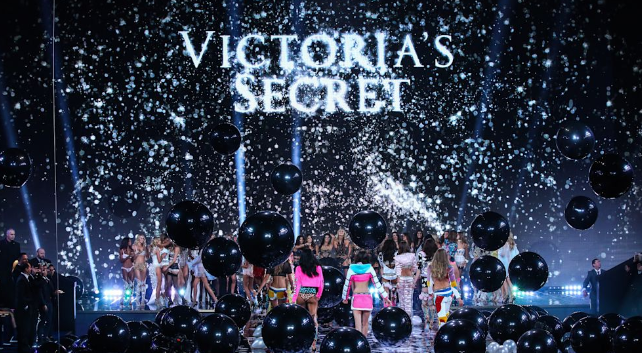
The Architecture of a Televised Phenomenon
In the high-stakes theatre of modern retail, the line between marketing genius and cultural relic is dangerously thin. Few corporate entities understand this volatility better than Victoria’s Secret, a brand that single-handedly transformed the global lingerie market from a quiet, functional necessity into a multi-billion-pound televised entertainment empire, only to watch its crown jewel crumble when the cultural terrain shifted beneath its feet.
The story began in 1975, when the first runway show was staged at New York City’s Plaza Hotel. At the time, the company faced an immediate, structural hurdle: the lingerie industry was shrouded in a conservative, almost taboo secretive atmosphere. Executives struggled to hire top-tier talent due to the risqué, scandalous connotations of lingerie modelling – a historical hesitation that seems almost comical when viewed from the vantage point of the mid-2000s, where the brand’s “Angel” contract became the highest-paying, most fiercely contested corporate crown in the entire fashion industry. As the brand grew under Leslie Wexner’s L Brands, its runway cast evolved through distinct generational layers. The foundational original era of the late 1990s relied on classic, statuesque commercial glamour, anchored by household names like Tyra Banks, Stephanie Seymour, and Heidi Klum. These were the original bearers of the wings, introduced in 1998 as a clever marketing tie-in for the brand’s “Angel” underwear collection. They brought a polished, traditional American catalogue aesthetic to living rooms across the globe.
By the turn of the millennium, however, the brand entered its undisputed golden age, sparked by an architectural shift in visual identity that fashion historians refer to as the “Brazilian Wave”. Gisele Bündchen broke through the high-fashion stratosphere, famously donning the record-breaking £11 million ($15 million) Red Hot Fantasy Bra in 2000. Gisele altered the corporate blueprint, but it was two specific, long-term contracted powerhouses who stepped into the vacuum to become the absolute permanent anchors of the franchise: Adriana Lima and Alessandra Ambrosio.
For nearly two decades, Lima and Ambrosio served as the senior spine of the company. Even as the brand expanded aggressively through the high-glamour “Max Angel” era of the 2010s – introducing global superstars like Candice Swanepoel, Behati Prinsloo, Miranda Kerr, and Doutzen Kroes – Adriana and Alessandra remained the supreme benchmarks of the catwalk. They survived multiple executive reshuffles, the launch of the youth-centric PINK sub-division, and the transitional digital era of 2015-2019, which saw the arrival of social media-famous stars like Gigi Hadid and Kendall Jenner alongside next-gen contracted Angels like Elsa Hosk. Yet, by 2018, the classic formula had curdled. The brand’s unapologetic, one-dimensional insistence that tall, exceptionally lean bodies represented the exclusive definition of “fantasy” ran directly into a wall of modern societal backlash. When Chief Marketing Officer Ed Razek infamously defended the exclusion of transgender and plus-size models from the runway, public outrage peaked. Combined with rapidly declining broadcast viewership – which plummeted to an all-time low of 3.27 million viewers in 2018 – the company had no choice but to officially cancel the annual televised special in November 2019. The era of the classic Angel was declared dead, and the brand entered a multi-year corporate hiatus to completely dismantle its marketing playbook.
The 2026 Reclamation
Flash forward to October 2026. Inside the sleek, industrialized expanse of Sony Pictures Studios in West Hollywood, Los Angeles, the Victoria’s Secret Fashion Show has returned. This is no longer the monolithic network television broadcast of the old L Brands era; it is a hyper-modern, multi-channel digital matrix livestreamed simultaneously across Amazon Live, TikTok, YouTube, and the personal social media feeds of the models themselves. The modern catwalk displays a radically altered landscape. In an explicit effort to realign with the contemporary zeitgeist, the lineup prioritises a diverse spectrum of body shapes, ethnic backgrounds, gender identities, and age brackets, featuring cultural icons like Ashley Graham and Alex Consani, alongside sports champions like WNBA star Angel Reese. It is an algorithmically optimised, politically conscious showcase designed for a modern consumer base.
Yet, when the show reached its ultimate commercial and emotional peak, the management team did not rely on a Gen-Z internet star or a viral influencer to deliver the finale. Instead, the music swelled, the lights shifted, and the crowd erupted as two women in their mid-40s walked out onto the runway side-by-side: Adriana Lima and Alessandra Ambrosio. Co-leading the grand finale walk, the two legendary veterans anchored the entire modern spectacle, providing the definitive visual image of the night. This moment exposed a fascinating corporate paradox. Victoria’s Secret had spent more than five years aggressively rebranding its identity, abandoning its traditional formulas, and dissolving the very concept of the exclusive “Angel” contract. Yet, when the corporate survival of the runway show hung in the balance, executives had to issue an emergency recall for their classic Brazilian anchors. It reveals that the brand’s historical reliance on Brazil was never a passive aesthetic preference; it is a foundational, structural dependency.
Between 2019 and 2023, the new management team attempted an entirely “Angel-free” hiatus, replacing the traditional supermodels with a collective of activists, athletes, and artists known as the VS Collective. While updating the brand’s values was a vital, non-negotiable step toward cultural rehabilitation, executives discovered a harsh retail reality: without the original, high-octane runway anchors, the brand struggled to generate raw commercial gravity or consumer excitement. The return of Lima and Ambrosio to the 2026 stage was not an act of nostalgic sentimentality. It was a calculated corporate reclamation of the brand’s most reliable, high-yielding structural assets.
Culture and Commerce Two-in-One: Weaponising the Runway
To understand why Victoria’s Secret management remains structurally hooked on this Brazilian formula, one must examine the profound difference between traditional high-fashion presentation and the specific commercial demands of mass-market retail. The high-fashion world – dominated by elite European couture houses – has long relied on a cold, detached, and solemn runway walk. Models are historically instructed to act as passive, emotionless hangers for the garments, maintaining an icy, distant gaze that projects exclusivity and unapproachable luxury. This minimalist aesthetic dominated the late 1990s fashion industry under the banner of “heroin chic.”
Victoria’s Secret, however, was trying to solve a entirely different commercial equation. They were not selling four-figure couture gowns to an insular elite; they were selling commercial lingerie to everyday consumers. To achieve this, they needed a completely different physical and energetic canvas. The historical breakthrough occurred when the brand tapped into the Brazilian scouting boom of the late 1990s, an influx of talent that introduced an athletic, sun-kissed, and unapologetically warm charisma to the global stage. Adriana Lima and Alessandra Ambrosio did not merely wear the lingerie; they performed it. They brought a vivid, theatrical energy to the catwalk – smiling openly, waving, blowing kisses to the cameras, and dancing in perfect synchronization with the live musical acts. They transformed a basic, elitist garment presentation into high-value, prime-time television entertainment.
Herein lies the signature Hers Today twist: this performance flipped the traditional script on the fashion gaze. While critics frequently dismissed the classic show as a regressive spectacle designed for male viewing, the underlying retail data consistently told a different story. Nearly 99% of Victoria’s Secret’s actual retail buyers were women. By casting Brazilian supermodels who projected an image of radiant health, athletic strength, and unbothered, joyful confidence, the management team managed to appeal directly to the female consumer. Lima and Ambrosio did not look like passive objects of desire; they projected a “girl’s girl” power dynamic. They made the act of buying and wearing lingerie feel like an aspirational form of self-directed fun, body pride, and personal celebration rather than an act of submission. Culture and commerce were seamlessly fused into a single, highly profitable marketing engine.
Innerwear as Outerwear: How Brazil Weaponised Commercial Charisma
This cultural fusion relied heavily on a broader societal shift regarding women’s fashion choices. As Suzanne Piazza, associate professor at FIT and Parsons, notes, the late 1980s and early 1990s marked a major turning point in the industry: “Thanks to Madonna, innerwear was outerwear. Everything kind of started to change.” Lingerie was no longer viewed as a hidden, functional necessity to be tucked away out of sight; it was rapidly transforming into a legitimate vehicle for personal expression, style experimentation, and social empowerment.
When Victoria’s Secret stepped onto this changing playing field with its grand fashion shows, they formalized this trend on a global scale. As fashion features writer Chantal Fernandez observes in her analysis of the brand’s historical strategy, the runway show was built around a highly effective premise: “They presented this very appealing idea that our underwear could be fashion, just like our clothing… This is fashion, this is fun, this is a way to express yourself.”
However, to successfully sell the idea of “innerwear as outerwear” to the general public, the brand required models who could carry the theatrical weight of this concept without letting the presentation descend into pure vulgarity. The Brazilian supermodels became the ultimate weapon in this marketing campaign. Their athletic, gym-honed physiques and infectious, high-energy runway walks provided the perfect balance. When Gisele walked out in a multi-million-pound rhinestone set, or when Adriana and Alessandra commanded the stage in elaborate, sculptural outerwear pieces constructed entirely from feathers and Swarovski crystals, they validated the idea that lingerie was an art form. Their charisma commercialised the concept, convincing millions of women worldwide that buying a lace bralette or a styled bodysuit was an act of participating in modern fashion culture. Brazil provided the exact physical and energetic infrastructure required to turn a risqué retail experiment into a mainstream lifestyle movement.
The Stamp-Sized Screen to the Multi-Channel Matrix
The evolution of how this Brazilian charisma was delivered to the public reflects the broader history of digital media over the past three decades. Long before the era of high-definition streaming and algorithmic feeds, Victoria’s Secret was an early, aggressive pioneer in digital broadcasting, staging a famous online experiment that pushed the boundaries of the early internet.
In 1999, the brand partnered with Broadcast.com and IBM to launch its very first internet webcast of the fashion show, running parallel to the traditional catalog operations. The digital infrastructure of the late ’90s was profoundly primitive compared to modern standards. Former Chief Marketing Officer Ed Razek later recalled that the historic 1999 stream was “about the size of two postage stamps in the middle of your screen.” It was a pixelated, stuttering visual experience that frequently crashed due to the unexpected influx of millions of internet users attempting to access the site simultaneously.
Contrast that historical “postage stamp” experiment with the current 2024-2026 revival era. Today, the show is broadcast globally across an interconnected digital ecosystem. Audiences can view the runway in pristine 4K resolution via Amazon Live, while simultaneously consuming real-time, behind-the-scenes content on TikTok, Instagram, and personal model livestreams. The consumer is no longer a passive viewer sitting in front of a network television set; they are embedded within an immersive, interactive multi-channel matrix. Yet, this technological leap highlights an ironic truth: while the medium has changed completely, the fundamental human requirement remains entirely identical. A retail corporation can build the most advanced, frictionless, multi-channel streaming matrix on Earth, but the digital algorithm still starves without high-signal, high-impact human content. You can optimize the delivery system, but you cannot optimize raw stage presence. The 2026 revival demonstrated that all the digital distribution networks in the world are meaningless if the figures walking down the catwalk cannot command the attention of a distracted viewer. This is why the classic Brazilian pipeline remains irreplaceable—it consistently produced the exact runway gravity required to pierce through modern digital noise.
The Industrial Pipeline: Inside the Sourcing Machine
This corporate dependency was never an accident; it was the direct result of a highly sophisticated, self-sustaining industrial pipeline that developed within South America during the height of the Angel era.
When Gisele, Adriana, and Alessandra rose to international fame in the early 2000s, they quickly climbed to the absolute top of Forbes’ highest-paid models list, earning unprecedented multi-million-pound incomes through their exclusive corporate contracts. This massive financial success triggered an aggressive talent-scouting boom within Brazil. Global modeling agencies recognized a gold rush and established an extensive infrastructure explicitly dedicated to identifying, grooming, and exporting runway talent.
Scouts systematically combed through southern Brazilian states, such as Rio Grande do Sul, establishing a highly competitive pipeline that fed directly into Western casting calls. This machine did not just look for classic facial symmetry; it explicitly audited candidates for the exact combination of physical traits required by Victoria’s Secret management:
- Athletic Core Strength: The structural capacity to carry massive, heavy Angel wings – often weighing up to 20 or 23 kilograms – down a slick runway with fluid grace and no visible physical strain.
- Innate Commercial Showmanship: The psychological comfort to break the traditional fourth wall of fashion, engaging directly with live musicians and television cameras without losing their high-fashion composure.
- Universal Consumer Appeal: A specific facial architecture that combined high-fashion bone structure with a warm, commercial friendliness that resonated across global retail demographics.
Victoria’s Secret management became completely “hooked” on this pipeline because it functioned as a reliable, self-sustaining corporate assembly line. Year after year, while other regions produced standard editorial models suited for quiet high-fashion lookbooks, the Brazilian apparatus consistently delivered runway-ready performers who could handle the intense physical and theatrical pressures of a global television event.
Conclusion
The multi-year journey from the historic cancellation of 2019 to the high-tech Los Angeles reclamation of October 2026 offers a vital case study in the mechanics of modern brand heritage. It proves that while a corporation must continuously evolve its ethical standards, product offerings, and media formats to survive, it cannot completely sever ties with the core visual engine that established its global identity.
The current 2024–2026 revival era has brought essential, permanent improvements to the runway. The integration of body diversity, age inclusivity, and multi-faceted cultural representation has successfully corrected the exclusionary, toxic missteps of the late 2010s. The modern catwalk is objectively more progressive, reflective, and respectful of its global consumer base than ever before. However, as the brand’s executive team navigated this restructuring, they arrived at a profound retail realization: in the hyper-fragmented digital age, nostalgia and authentic star power are the ultimate modern retail currencies. You can construct thousands of automated digital marketing campaigns around standard social media influencers, but you cannot artificially manufacture the rare, commanding runway gravity of the classic supermodel era.
The “Grand Matrix” ultimately proves that no matter how much a brand iterates on its media platforms, delivery systems, or corporate messaging, the paths to successfully commanding global consumer attention are deliberately set to hook onto the blueprint surrounding its most legendary Brazilian supermodels. After all the corporate rebranding, public apologies, and strategic shifts, the road to saving the runway seems to be routed through Brazil.