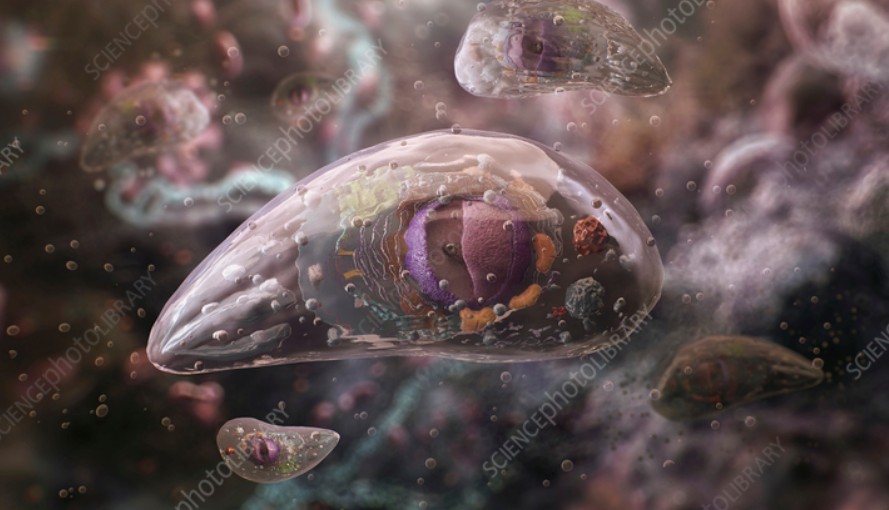
Ever struggle with chronic health issues, and view your bodies as isolated battlegrounds, fighting off rare, unlucky flukes? The reality of modern microbiology tells a completely different story. The chronic fatigue and systemic inflammation millions of women face aren’t caused by exotic, hard-to-find tropical diseases. Instead, they are driven by some of the most common, highly adapted, and structurally aggressive organisms on the planet. These pathogens have spent millennia perfecting what researchers call “colonisation games”- highly sophisticated strategies designed to slip past human defences, adapt to hostile environments, and establish lifelong residency within our tissues. To understand how they lock us into loops of chronic illness, we first have to look at the staggering, undeniable scale of their global footprint.
The Global Pathogen Footprint
Statistically, the statistics below mean that roughly one out of every two people reading this is already hosting at least one, if not all three, of these organisms. For the vast majority of human history, medical science treated these three entities as entirely separate illnesses belonging to completely different departments. H. pylori was a stomach issue for gastroenterology, Candida was a topical issue for gynaecology, and Toxoplasma was a latent parasitic issue buried away in textbooks.
Pathogen / Global Prevalence / Primary Systemic Impact
Helicobacter pylori (Bacteria) / 50% of the human population (Over 4 billion people) / Neutralizes stomach acid, destroys gastric mucosa, links directly to peptic ulcers and chronic tissue degradation.
Candida albicans (Fungus) / Resides in up to 70% of humans as a peaceful commensal organism / Shifts from harmless yeast to invasive hyphae; constructs dense, antibiotic-resistant mixed biofilms.
Toxoplasma gondii (Parasite) / 30–50% of the global population (Over 2.5 billion people) / Crosses the blood-brain barrier, forms lifelong tissue cysts, up-regulates systemic IL-10 to mute local immunity.
However, modern epidemiological data has revealed a much more alarming reality. In geographic regions where these numbers overlap significantly – particularly across parts of Latin America, Eastern Europe, and dense urban centres – clinical data shows that patients don’t just experience these infections sequentially. They experience them simultaneously. When these geographic lines intersect within a single host, the math changes from addition to multiplication. Clinical tracking shows that individuals testing positive for dual H. pylori and Toxoplasma infections experience a sharp escalation in severe tissue inflammation, significantly larger gastric lesions, and extended healing times compared to patients dealing with an isolated infection. The pathogens are actively trading favours, relying on global prevalence to find each other, team up, and pull off a multi-stage takedown of the human defence system.
From Vibrant to Vulnerable
Consider how this plays out in an everyday scenario. Picture a vibrant, active woman. She eats a clean diet, hits the gym three times a week, has a loving partner, and practices meticulous hygiene. She doesn’t feel “sick,” has no acute symptoms, and has no reason to believe anything is wrong inside her body.
But quietly, beneath the surface, the colonisation game has already begun.
It starts imperceptibly. A week comes along where she feels just a little more tired than usual – the kind of sluggishness easily blamed on stress at work or a poor night’s sleep. Then, she notices her digestion feels slightly “off.” Healthy foods that used to give her energy now leave her feeling subtly bloated and heavy. She brushes it off, drinks an extra glass of water, and pushes through.
Months pass, and the weakness deepens into a persistent, unshakeable fatigue. Her morning coffee no longer cuts through the mental fog, her workouts feel twice as heavy, and her recovery times double. She looks in the mirror and sees a shadow of her usual energy, yet her routine hasn’t changed. She has no idea that she is completely healthy on paper, but structurally compromised from within. Her immune defences aren’t failing because she is weak; they are being actively, systematically dismantled by an anatomical loop she doesn’t even know exists.
Phase 1: Breaking the Guard (How the Security System is Swapped)
When this everyday woman begins to feel her energy slip, her first instinct is to assume her body is just overwhelmed by life. But inside her tissues, a highly sophisticated molecular heist is taking place. The mastermind behind this opening move isn’t even a gut resident: it’s Toxoplasma gondii. To understand how a parasite sitting quietly in muscle or brain tissue can dictate what happens in a woman’s stomach, you have to look at how it manipulates the body’s internal emergency broadcast system.
For the vibrant but weakening woman, this systemic rise in IL-10 means that while her overall bloodwork might look completely normal, her local gut immunity has effectively been handed a “stand down” order. The specialized immune cells that normally patrol her stomach lining are blinded. This is the exact opening Helicobacter pylori has been waiting for. Under normal circumstances, a healthy, alert immune response would detect this bacteria and suppress it before it could cause trouble. But with the Toxoplasma-induced IL-10 blanket muting the alarm, H. pylori doesn’t just enter the stomach; it walks right past the front gate unchallenged, ready to begin phase two of the takedown.
Phase 2: Destroying the Barrier (The Acid Shield Goes Dark)
With the local immune patrol muted by the opening phase of the infection, Helicobacter pylori can move from a quiet squatter to an aggressive demolition team. To survive in the human stomach, H. pylori has to overcome an environment that is naturally as acidic as battery acid. This extreme acidity is the body’s primary chemical barrier – a literal moat designed to instantly dissolve incoming pathogens before they can reach the rest of the digestive system. But H. pylori doesn’t just tolerate this acid; it completely rewrites the chemistry of the stomach to suit its own needs.
Once the acid barrier is neutralized, H. pylori targets the physical defence: the thick, slippery layer of gastric mucus that protects the stomach’s raw tissue from being digested by its own juices. Using its corkscrew-shaped tails, the bacteria literally drill deep through this protective mucus layer. As it tunnels, it releases specific toxins (known as CagA and VacA) that act like chemical scissors, snipping apart the junctions that hold the protective lining together.
This drilling action exposes raw, unprotected epithelial tissue underneath, sparking localized cellular death and leaving behind inflamed micro-ulcers. The physical structure of the gut is now breached, creating a raw, unprotected landscape that sets the stage for the third and most elusive phase of the takeover.
Phase 3: Colonisation and Hiding (The Fungal Bunker)
The breach of the physical and chemical barriers in Phase 2 completely alters the ecosystem of the upper digestive tract. This landscape shift allows a common, normally peaceful neighbour to transform into an opportunistic predator: Candida albicans.
Under healthy conditions, Candida lives quietly within the gut, kept in check by protective stomach acid and a vigilant immune system. But when H. pylori neutralises the acid and drills holes in the tissue, it creates the exact environment Candida needs to launch its colonization game.
Candida is a master of adaptation. The moment it senses the alkaline ammonia cloud and encounters the raw, exposed tissue of an ulcer, it receives a chemical green light to transform. It changes from a smooth, round, harmless yeast cell into an aggressive, thread-like fungal network called hyphae. These thread-like structures grow long, root-like tentacles that dig directly into the microscopic tears and damaged tissues left behind by H. pylori. Candida has found its anchor, and it begins to multiply rapidly across the unprotected lining. With Candida firmly rooted, the interaction between these two microorganisms takes a sci-fi turn.
Inside this fungal vault, H. pylori is perfectly safe. It is entirely shielded from any remaining stomach acid, the host’s immune cells, and, most importantly, standard antibiotic therapies. Because antibiotics cannot easily penetrate the tough cell walls of a fungus, the bacteria sit securely in an armoured biological bunker.
To finalise this takeover, the rooted Candida and the hidden H. pylori work together to secrete a thick, sticky shield of sugars and proteins called a mixed biofilm. This slimy matrix coats the tissue lining, creating a physical barrier that traps the pathogens inside while bouncing away white blood cells and medications alike. The fortress is complete. The pathogens are no longer just separate infections; they have woven themselves into a single, highly resistant, self-sustaining ecosystem deep within the body’s internal architecture.
How Intimacy Becomes an Anatomical “Hiding Spot”
Up until now, we’ve focused on the digestive tract. But this pathogen triage alliance – Toxoplasma, H. pylori, and Candida – is highly mobile. It doesn’t stay confined to the stomach and intestines. When we move into the realm of deep intimacy, the body’s anatomy transforms from a series of open pathways into a collection of mechanical traps. This is the “Deep End” of the infection loop. And it is here that the mechanical reality of sex acts as a high-speed delivery system, forcing these pathogens into the most protected, isolated corners of the reproductive anatomy.
In the female anatomy, the vaginal canal is not a flat, smooth tube. At the very top, surrounding the opening of the cervix, are a series of deep, blind-ended architectural pockets called the fornices. When intercourse involves deep penetration, it acts like a mechanical piston. With every rhythmic movement, the air and fluids within the vaginal vault are compressed. This force doesn’t just move surface fluid; it physically pushes the pathogens – the Candida hyphae and the H. pylori hitchhikers – upward and away from the exit. It forces them directly into the “blind spots” of the vaginal fornices and drives them against the cervical os (the entrance to the uterus).
The Cervical Vault: The Ultimate Hiding Spot & The Invisible Reservoir
Once the Candida has anchored itself into these fissures, it creates a sticky, tangled web – the foundation of the mixed biofilm bunker we discussed earlier. The cervical canal itself is not smooth; it is lined with deep, branching tunnels called cervical crypts. The mechanical pressure of deep penetration acts as an injection system, pushing the H. pylori-laden Candida roots directly into these crypts. Once inside these deep-tissue tunnels, the pathogens are completely unreachable.
This isn’t just a “female” problem. During this process, the male is acting as a reservoir. During deep intimacy, his own urethral lining is exposed to these shifted fluids, allowing the pathogens to migrate upward into the prostate gland – a hidden, well-protected bunker for the male as well. This is the “Loop.” The pathogens aren’t just surviving; they are physically woven into the deepest recesses of the couple’s shared anatomy. Every deep intimate encounter acts as a mechanical “sponge,” squeezing these deep-seated bunkers and re-releasing the pathogens back into the system, ensuring the cycle of systemic fatigue, gut distress, and pelvic inflammation continues indefinitely.
Stop Scratching the Surface
If you are a woman trapped in this exhausting cycle – watching your energy fade, dealing with unpredictable bloating, and continuously treating “random” yeast infections or pelvic flares – it is time to change the entire way you look at your body.
Your body is not a collection of isolated compartments. Your stomach, your brain, your immune system, and your reproductive anatomy are profoundly interconnected parts of a single, continuous ecosystem.
The medical community has long been guilty of treating women’s health by scratching the surface. They give you a pill for your stomach, a cream for your pelvis, and a wellness quote for your fatigue. But as long as these three pathogens are allowed to maintain their cross-kingdom alliance, and as long as the mechanical reality of deep intimacy continues to act as their high-pressure hiding mechanism, topical, isolated treatments will always fail.
Realising that this hidden fortress exists is not a reason to live in fear or abandon intimacy. It is an anatomical wake-up call. It is the definitive proof that you are not crazy, you are not just “stressed,” and you are not imagining your symptoms. To break the loop, stop chasing isolated symptoms and start understanding the deep, hidden architecture of how these pathogens play the game.